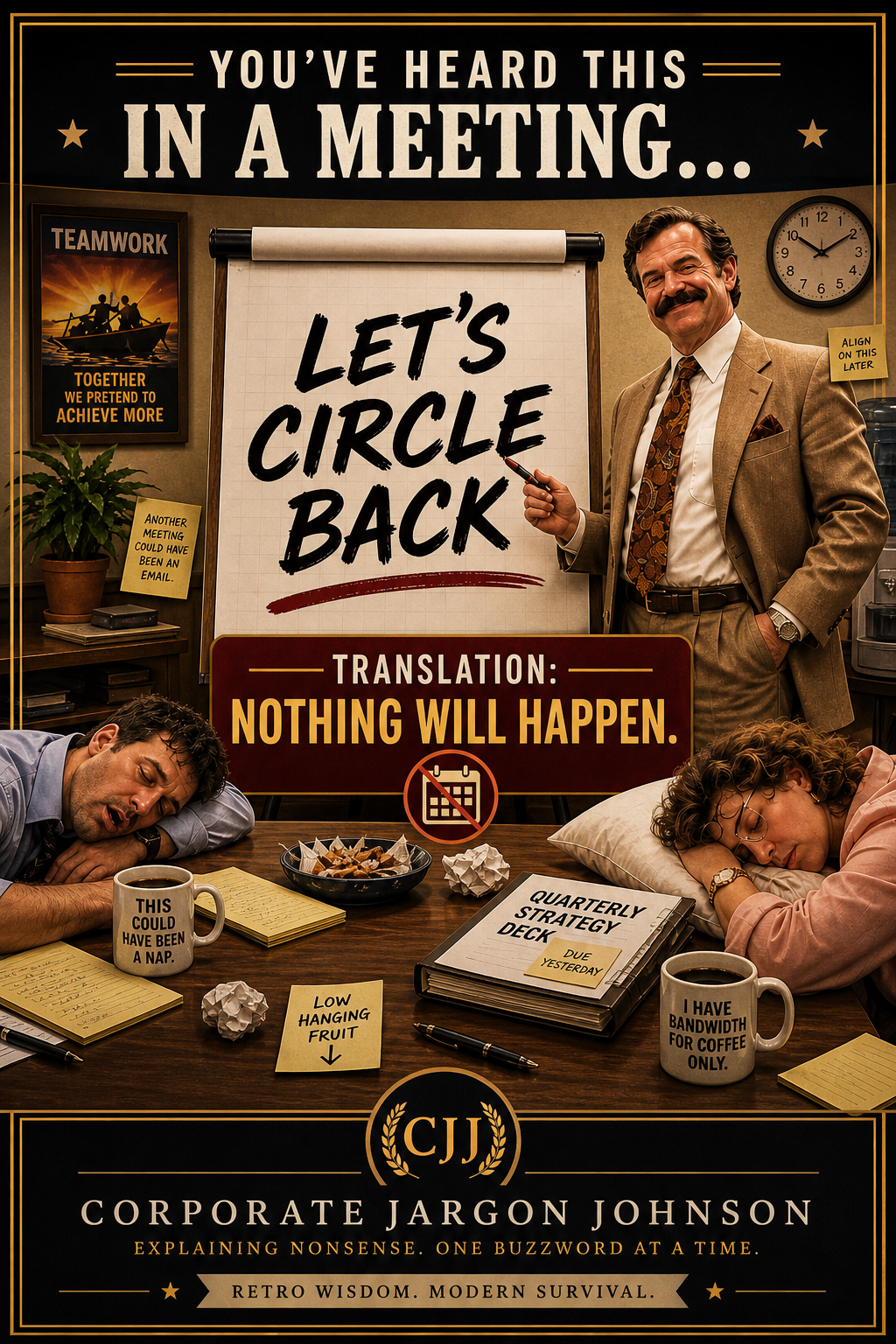

What Does “Circle Back” Mean at Work? (Corporate Jargon Explained)
Corporate jargon explained. Discover what “circle back” really means at work, why managers say it, and how to deal with buzzword meetings. A funny survival guide from Office Bantomime.

You’re in a meeting.
You’ve just suggested something useful.
The room goes quiet.
A manager leans back in his chair… smiles… and says:
“Let’s circle back.”
And just like that — nothing gets decided.
Welcome to the strange world of corporate jargon — where phrases sound productive but often mean something very different in reality.
Typical Office Scenario
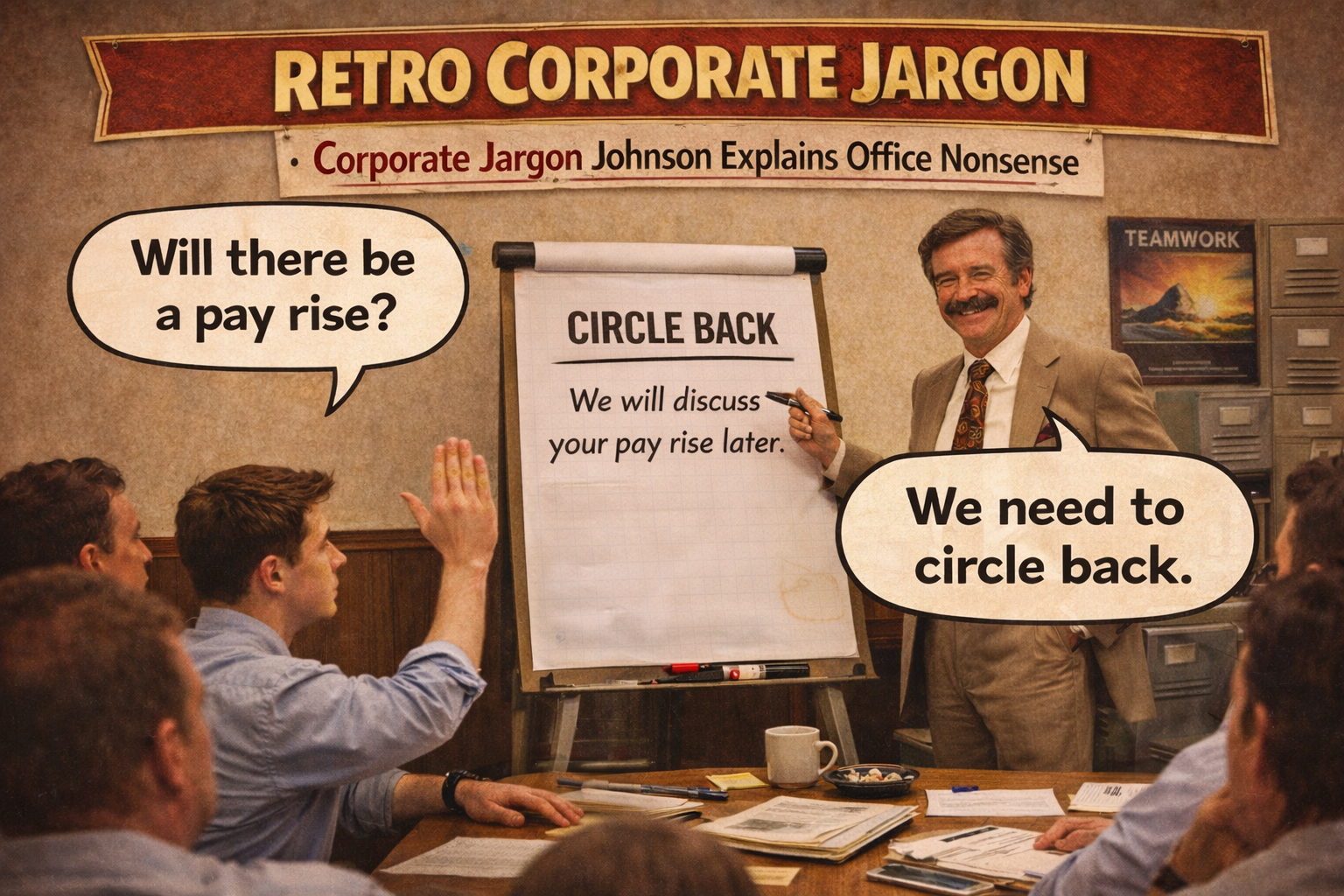
An employee nervously raises their hand.
“Will there be a pay rise?”
Corporate Jargon Johnson nods confidently.
“We need to circle back.”
Meeting moves on.
Hope evaporates.
Everyone writes notes they’ll never read again.
What “Circle Back” Actually Means
In theory, the phrase simply means:
Return to the topic later.
In reality, it often means:
- decision postponed
- responsibility unclear
- urgency reduced
- conversation redirected
It is one of the most recognisable survival phrases in modern office culture.
7 Reasons Managers Say “Circle Back”
🔴 1. To Delay A Decision
The most common use.
Someone is not ready to commit — so the issue gets parked.
🟠 2. To Control Meeting Time
When meetings start running over, jargon becomes a scheduling weapon.
🟡 3. To Avoid Disagreement
Rather than challenge an idea directly, softer language keeps the atmosphere polite.
🟢 4. To Sound Strategic
Corporate language signals authority.
Using phrases like this can make someone appear organised and thoughtful.
🔵 5. To Buy Time
More information may genuinely be needed — but sometimes it simply masks uncertainty.
🟣 6. To Shift Ownership
When something gets “circled back,” accountability often drifts into the background.
⚫ 7. To Avoid Saying No
Rejecting ideas directly can feel harsh.
Deferring them feels safer — even if it creates confusion later.
Where Did The Phrase Come From?
The literal meaning — returning to a starting point — has existed for decades.
Its corporate usage grew alongside:
- collaborative management styles
- large team structures
- diplomatic communication culture
As workplaces became more complex, direct language softened into phrases that helped maintain harmony while postponing tough decisions.
Today it sits comfortably alongside other classics like:
- Take this offline
- Align expectations
- Low-hanging fruit
Is “Circle Back” Still Popular In 2026?
Yes — extremely.
Despite being widely mocked in workplace humour, the phrase remains deeply embedded in:
- hybrid meetings
- project discussions
- performance reviews
- leadership conversations
Workplace surveys and professional discussions continue to rank corporate jargon among the most frustrating aspects of office communication.
Ironically, the more people complain about it, the more culturally powerful it becomes.
How To Deal With It (Survival Guide)
If you hear this phrase regularly:
- Ask when the topic will be revisited
- Clarify who owns the next action
- Summarise decisions after meetings
- Suggest a follow-up date immediately
- Stay calm — jargon thrives on ambiguity
Handled well, “circle back” can become a scheduling tool instead of a productivity black hole.
Who Usually Says It?
You’ll hear this phrase most often from:
- Buzzword Managers
- Passive Leaders
- Heads of Divisions
- Some CEO's
- Policy-driven HR archetypes
- Corporate Jargon Johnson himself
Recognising the personality behind the phrase helps you respond more strategically.
⭐ FAQ SECTION
❓ Is “circle back” a bad phrase?
Not always. It can help prioritise work — but overuse leads to delays and confusion.
❓ Why do offices use so much jargon?
Jargon softens communication, signals authority, and helps avoid confrontation.
❓ What are the most annoying workplace buzzwords?
Common answers include “circle back,” “take this offline,” and “low hanging fruit.”
❓ How can I stop conversations from being endlessly postponed?
By asking clear questions about timelines, ownership, and next steps.