
Middle Management Muppets: Where the Phrase Came From and Why It Still Hurts
What does “Middle Management Muppets” mean? Explore the origin of the workplace phrase, why employees still use it, and the corporate behaviours behind the label.

The Corporate Label Nobody Wants
Some office phrases disappear after a few years.
Others survive restructures, redundancies, mergers, agile transformations, five new CEOs, and three pointless rebrands.
“Middle Management Muppets” is one of them.
It is the phrase employees whisper after another unnecessary Teams call.
The phrase muttered when someone schedules a meeting to discuss another meeting.
The phrase quietly dropped into Slack chats after a manager says:
“Let’s circle back and align moving forward.”
Nobody really knows who invented it.
But everybody knows exactly who it describes.
And somehow… it still hurts.
What Does “Middle Management Muppets” Mean?
The phrase “Middle Management Muppets” is used to describe ineffective middle managers who create unnecessary bureaucracy, endless meetings, confusing communication, and performative leadership inside corporate workplaces.
In simple terms:
- They look busy
- Sound important
- Hold meetings constantly
- Create process layers
- But rarely improve anything
Employees often use the term sarcastically to describe management cultures that Prioritise visibility, corporate jargon, and hierarchy over genuine leadership.
Why Middle Management Gets Criticized So Much
Not all middle managers are bad.
In fact, good middle managers hold organisations together.
The problem is:
bad middle management creates friction everywhere.
A poor middle manager can:
- Slow decision-making
- Kill morale
- Create office politics
- Increase burnout
- Block innovation
- Destroy communication between leadership and employees
And employees notice it immediately.
That is why phrases like “Middle Management Muppets” spread so quickly in workplace culture.
The Origin of the Phrase
Nobody can point to an exact origin.
It likely evolved from British workplace humour during the rise of corporate bureaucracy in the 1990s and early 2000s.
As office environments became more process-heavy, employees started mocking management behaviour through sarcastic labels.
Eventually:
- Office dinosaurs
- Corporate drones
- Cubicle rats
- KPI warriors
- Meeting zombies
…all became part of workplace language.
“Middle Management Muppets” stuck because it perfectly captured a very specific type of corporate behaviour:
people promoted into management positions without genuine leadership ability.
Signs You’re Working With Middle Management Muppets
1. Meetings Become Their Entire Personality
Every issue somehow requires:
- a sync
- a workshop
- a review session
- a catch-up
- a follow-up
- a post-review
Nothing actually changes afterwards.
2. They Speak Almost Entirely in Corporate Jargon
You rarely hear direct language.
Instead you hear:
- “Let’s soicalise this.”
- “We need alignment.”
- “Can we action this offline?”
- “We’re parking this for now.”
- “Let’s cascade the messaging.”
At some point you realise:
there is no actual message.
3. Visibility Matters More Than Results
The work itself becomes secondary.
What matters is:
- looking busy
- attending meetings
- producing slides
- replying instantly
- being seen by leadership
Real productivity gets buried underneath performance theatre.
4. Everything Needs Approval
Simple tasks become approval chains.
One small decision suddenly requires:
- Three managers
- Two governance reviews
- A steering group
- Legal awareness
- And a PowerPoint deck nobody will read
5. They Create Work Instead of Solving Problems
Good managers remove friction.
Middle Management Muppets often create it.
Processes multiply.
Spreadsheets expand.
Documentation becomes endless.
Meanwhile the original problem still exists.
6. They Panic When Senior Leadership Appears
The office atmosphere changes instantly.
Suddenly:
- Desks are cleaned
- Fake urgency appears
- Everyone acts unusually professional
- Updates become exaggerated
- Meetings multiply again
It becomes corporate theatre.
Real Office Scenarios Everyone Recognizes
🟡 The Teams Call Muppet
Talks for 14 minutes.
Says absolutely nothing.
Leaves everybody more confused than before.
🟡 The PowerPoint Muppet
Creates animated slides for discussions that could have been solved in two emails.
Still uses transitions.
🟡 The Escalation Muppet
Escalates everything.
Even the coffee machine issue somehow becomes a “high-priority operational concern.”
🟡 The Visibility Muppet
Believes leadership means standing near executives during office visits.
Frequently spotted pretending to discuss strategy.
🟡 The KPI Muppet
Measures everything.
Understands nothing.
Why Employees Secretly Hate Corporate Bureaucracy
The frustration is not really about meetings.
Or PowerPoint.
Or status updates.
It is about feeling trapped inside systems that no longer make sense.
Employees become exhausted when:
- simple decisions become political
- productivity gets replaced by process
- leadership becomes performative
- nobody takes accountability
- bureaucracy grows faster than results
This is why workplace satire connects so strongly online.
People recognise it instantly.
The Difference Between a Real Leader and a Middle Management Muppet
| Real Leader | Middle Management Muppet |
|---|---|
| Removes blockers | Creates blockers |
| Makes decisions | Delays decisions |
| Communicates clearly | Uses jargon constantly |
| Protects teams | Protects hierarchy |
| Solves problems | Creates processes |
| Builds trust | Builds reporting chains |
That difference is why good managers are remembered.
And bad ones become office folklore.
The Psychological Side of It
Here is the uncomfortable truth:
some middle managers are not incompetent.
They are trapped.
Large organisations often reward:
- Visibility
- Politics
- Compliance
- Risk avoidance
- Presentation skills
…more than genuine leadership.
Over time, management cultures slowly drift toward bureaucracy.
The result?
People begin managing process instead of people.
That is when employees start inventing labels like:
- Corporate Drone
- Cubicle Rat
- Office Dinosaur
- Middle Management Muppet
Humour becomes survival.
Corporate Labels Similar to “Middle Management Muppets”
If you enjoyed this one, you probably know a few others too:
- Corporate Drone
- Cubicle Rat
- Meat in the Seat
- Office Dinosaur
- KPI Warrior
- Slack Zombie
- Meeting Room Phantom
- Visibility Hunter
- The Corporate Cockroach
Every workplace has them.
Why the Phrase Still Hurts Today
Because deep down:
most employees have experienced it.
Almost everyone has worked under:
- poor leadership
- pointless bureaucracy
- fake urgency
- unnecessary hierarchy
- exhausting office politics
The phrase survives because the behaviour survives.
And modern workplaces still struggle with the same problems.
Final Thought
The worst middle managers do not destroy organisations overnight.
They slowly suffocate them.
One approval chain.
One pointless meeting.
One PowerPoint transition at a time.
And that is exactly why “Middle Management Muppets” refuses to disappear.
Explore More Corporate Labels
👉 Corporate Drone
👉 Cubicle Rat
👉 Meat in the Seat
👉 Office Dinosaur
👉 Toxic Coworkers
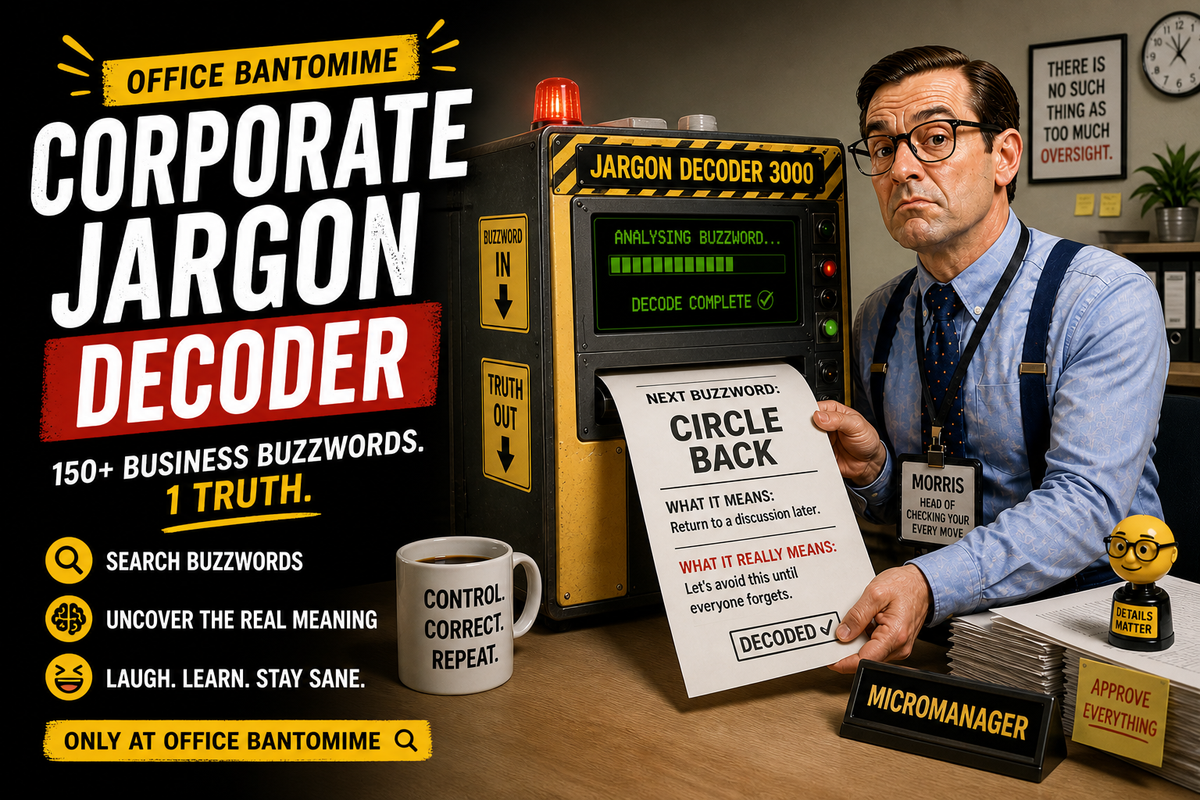
👉 Corporate Jargon Decoder
FAQs About Middle Management Muppets
What does “Middle Management Muppets” mean?
It is a sarcastic workplace phrase used to describe ineffective middle managers who create bureaucracy, unnecessary meetings, and poor communication.
Is the phrase insulting?
Usually yes — it is commonly used as workplace satire or criticism of corporate management culture.
Why do employees dislike bad middle management?
Employees often become frustrated when management creates unnecessary process, slows decision-making, and prioritizes appearances over results.
Are all middle managers bad?
No. Good middle managers are essential for communication, team support, and operational leadership. The phrase targets ineffective management behaviour, not all managers.
 James Mason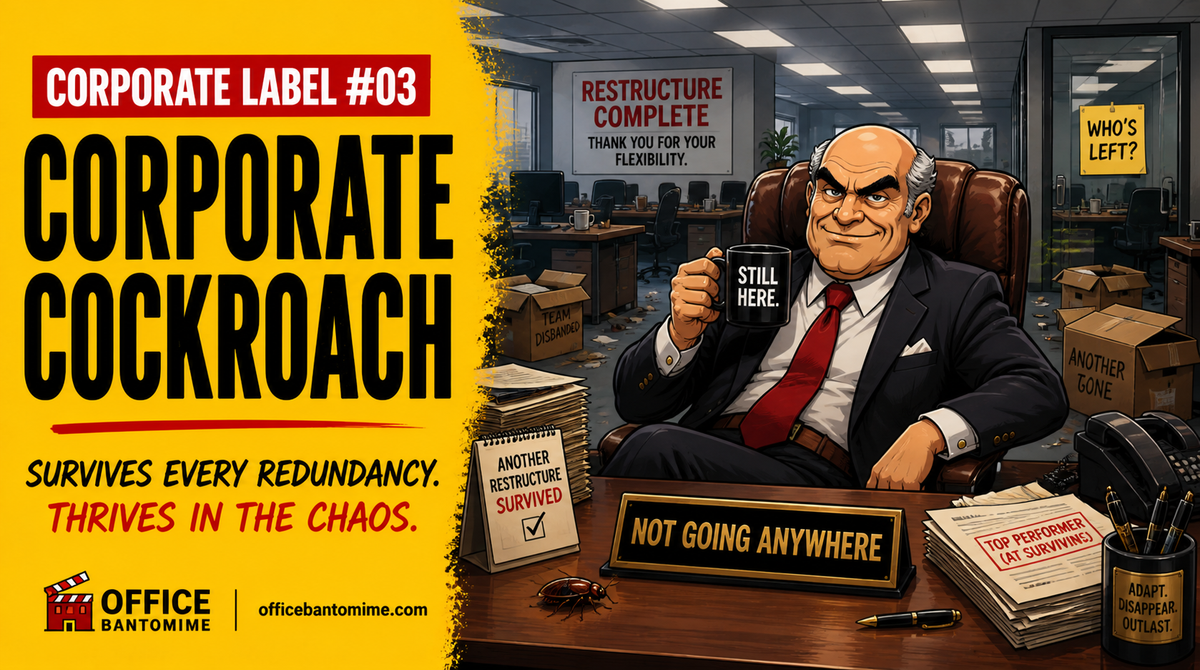
 James Mason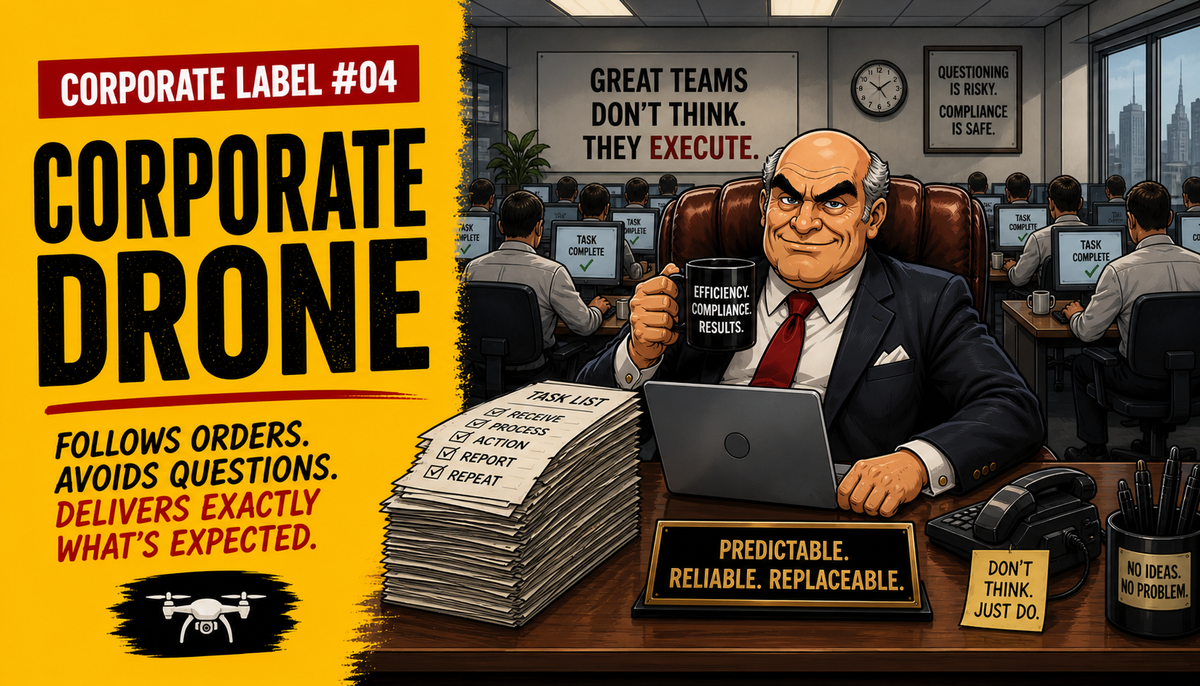
 James Mason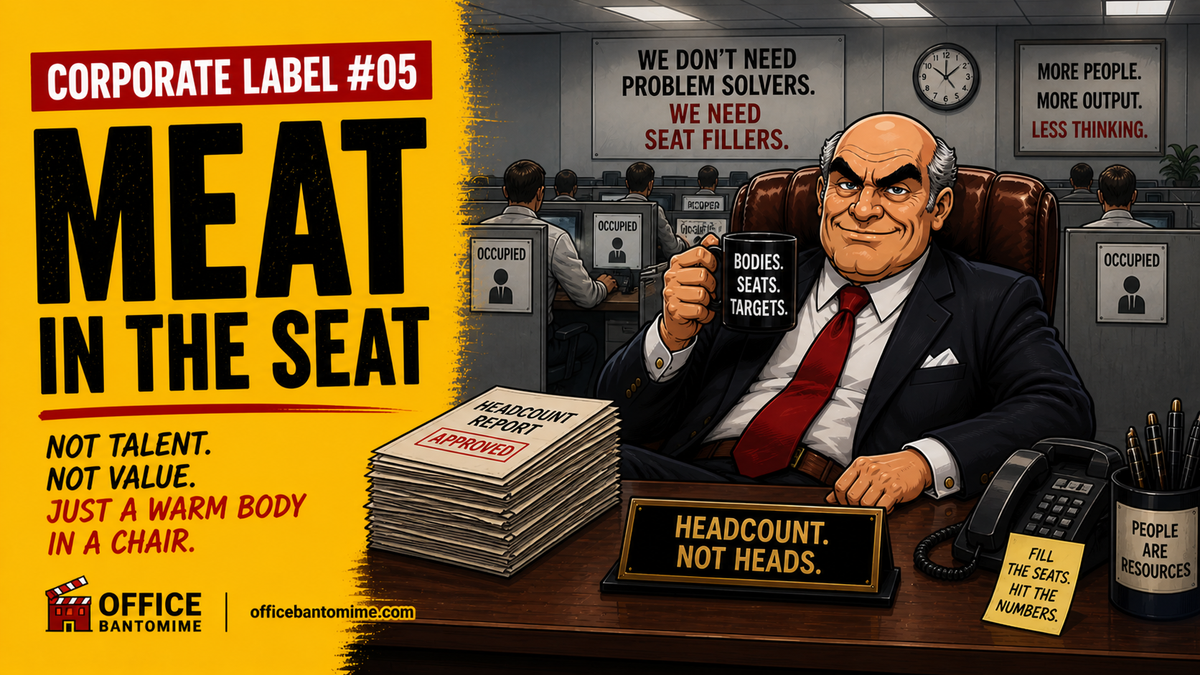
 James Mason