
Jobpocalypse Meaning: Corporate Buzzword For Mass Layoffs Explained
What does “Jobpocalypse” really mean at work? Discover the corporate buzzword used to explain layoffs, restructuring and leadership panic — plus smart ways to survive it.

Retro Corporate Jargon Johnson Explains Office Nonsense
There was a nervous tension in the meeting room.
The blinds were half-closed.
The coffee was stale.
The flipchart was freshly blank — waiting for meaning.
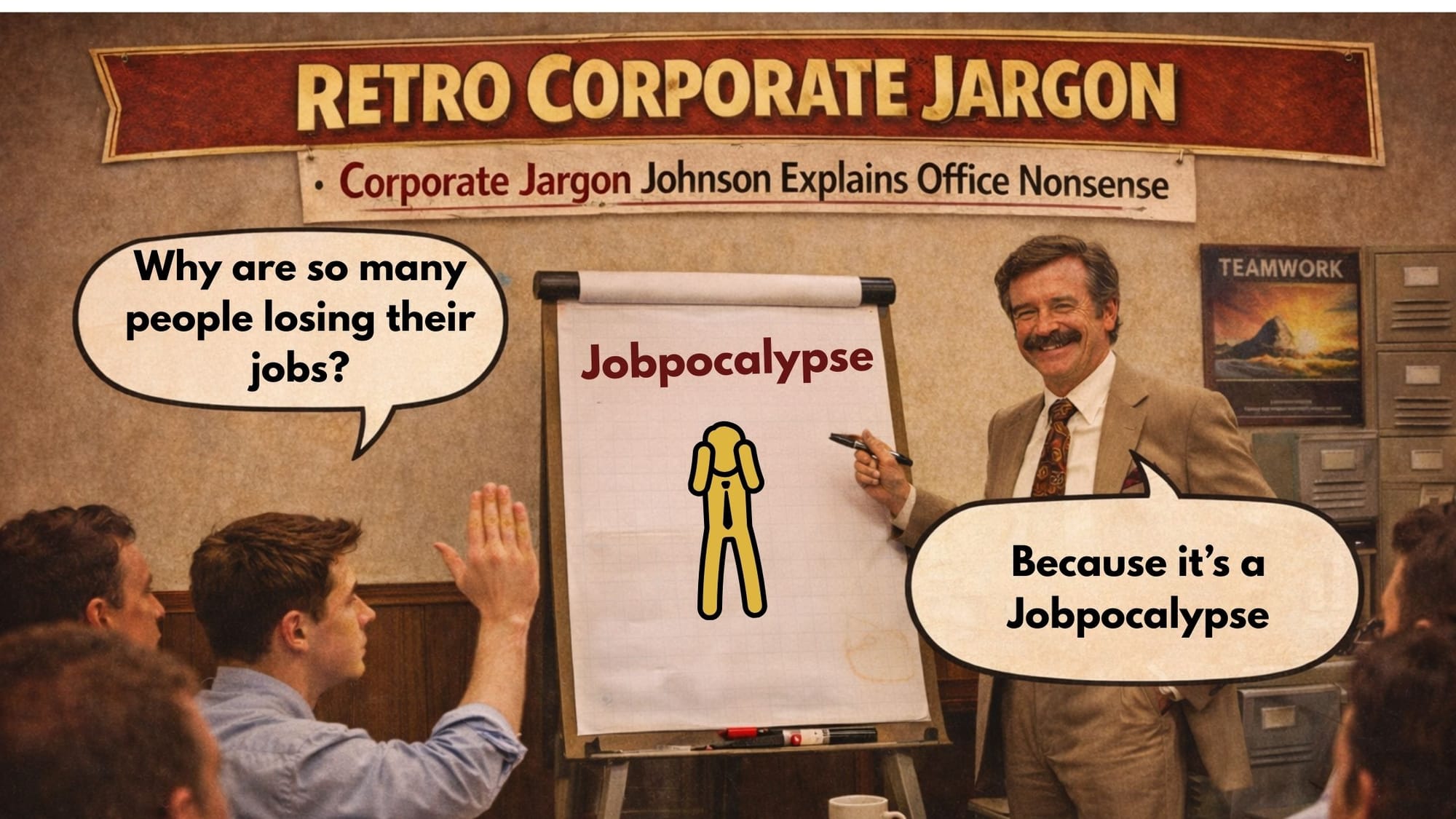
A timid employee finally raised his hand.
“Why are so many people losing their jobs?”
Johnson smiled.
Not reassuringly.
But professionally.
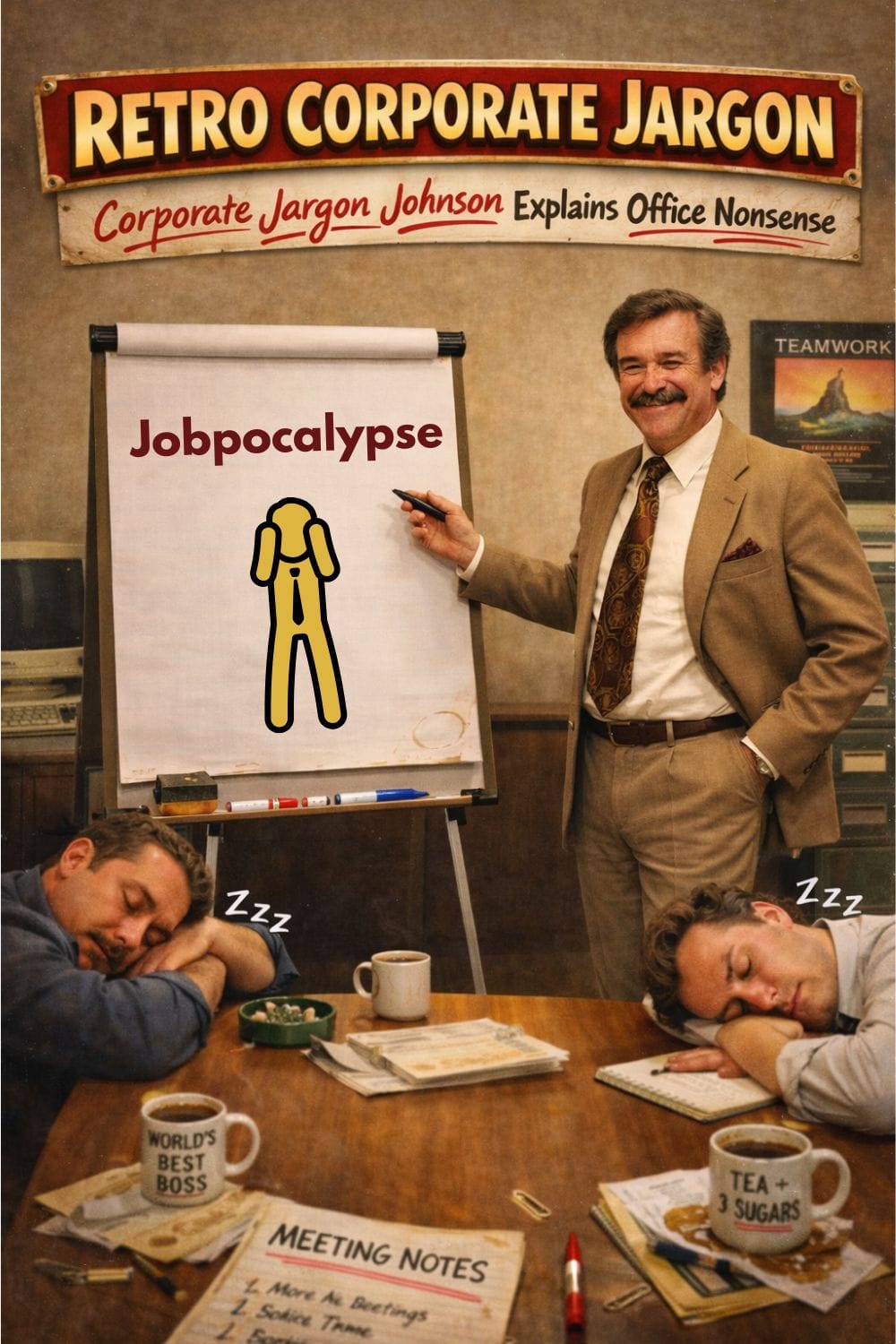
He turned to the flipchart and wrote a single word.
Jobpocalypse.
Problem solved.
Meeting adjourned.
What Does “Jobpocalypse” Actually Mean?
In corporate jargon terms, a Jobpocalypse is a dramatic-sounding explanation for large-scale layoffs that avoids any clear accountability.
It sounds strategic.
It sounds inevitable.
It sounds like nobody could have prevented it.
Which makes it the perfect buzzword.
Typical workplace translation:
- “We hired too aggressively.”
- “The market changed.”
- “AI exists now.”
- “Leadership panicked.”
- “Nobody wants to admit fault.”
So instead…
👉 It’s the Jobpocalypse.
Red Flags You’re Living Through a Jobpocalypse
🔴 Leadership suddenly starts using phrases like:
- “Restructuring for future resilience”
- “Optimising workforce alignment”
- “Strategic right-sizing”
- “Flattening organisational layers”
🔴 Managers stop making eye contact in corridors.
🔴 Calendar invites appear titled “Quick Catch-Up.”
🔴 Your role is described as “evolving.”
🔴 HR starts smiling too much.
🔴 The phrase “This isn’t about performance” is heard repeatedly.
How To Survive the Office Jobpocalypse
Let’s be real.
You cannot out-buzzword corporate panic.
But you can stay smart.
✔ Update Your CV quietly
Not dramatically.
Not emotionally.
Just professionally.
✔ Build internal allies
The people who survive cuts are often the ones who are visible and trusted.
✔ Learn something useful
New tech.
Automation.
AI tools.
Anything that makes you harder to remove.
✔ Avoid doom-spiral conversations
Speculation spreads fear faster than facts.
✔ Keep perspective
Corporate storms come and go.
Your career is longer than one bad leadership cycle.
Jobpocalypse FAQs
❓ Is Jobpocalypse a real business term?
No. It’s a dramatic buzzword used to make layoffs sound strategic rather than reactive.
❓ Does Jobpocalypse mean the company is failing?
Not always. Sometimes it means leadership miscalculated growth or budgets.
❓ Should I panic if my workplace uses this language?
No — but you should prepare. Awareness beats denial.
Final Thought From Johnson
When corporate leaders cannot explain reality…
They invent vocabulary.
Because nothing says control like a made-up apocalypse.
 James Mason
 James Mason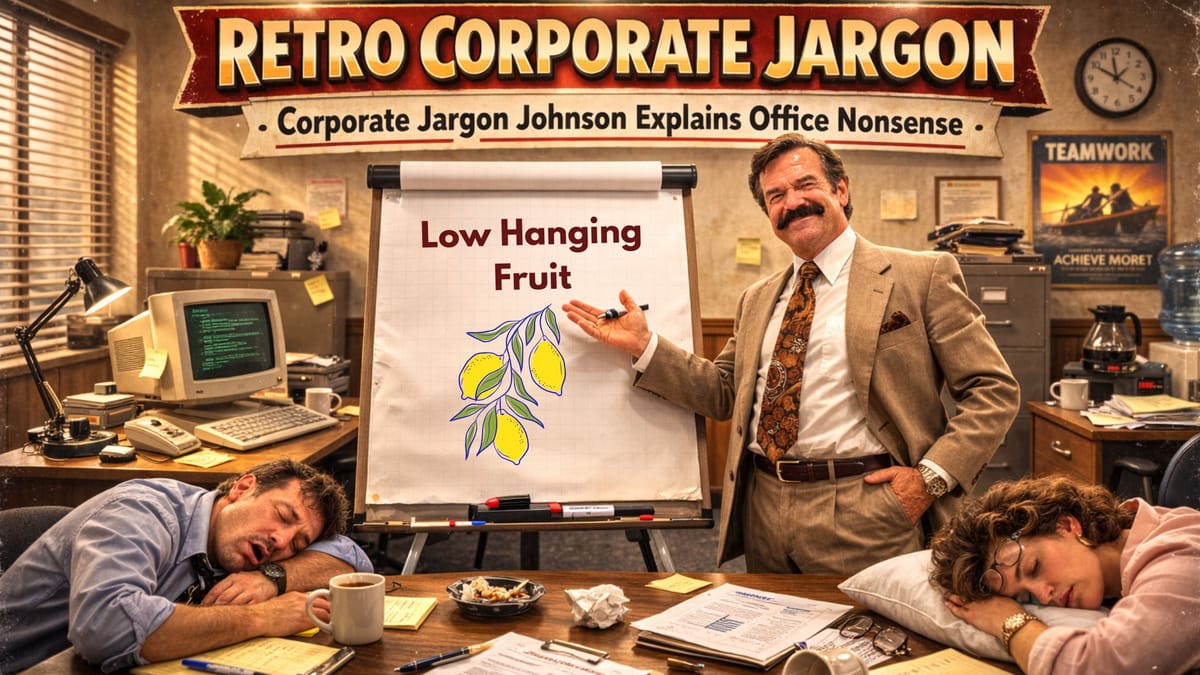
 James Mason