
Corporate Label #03: Corporate Cockroach (Meaning, Signs & Workplace Reality)
Discover the survival tactics of the Corporate Cockroach—those untouchable office workers who outlast redundancies, frustrate bosses, and thrive in every workplace shake-up.


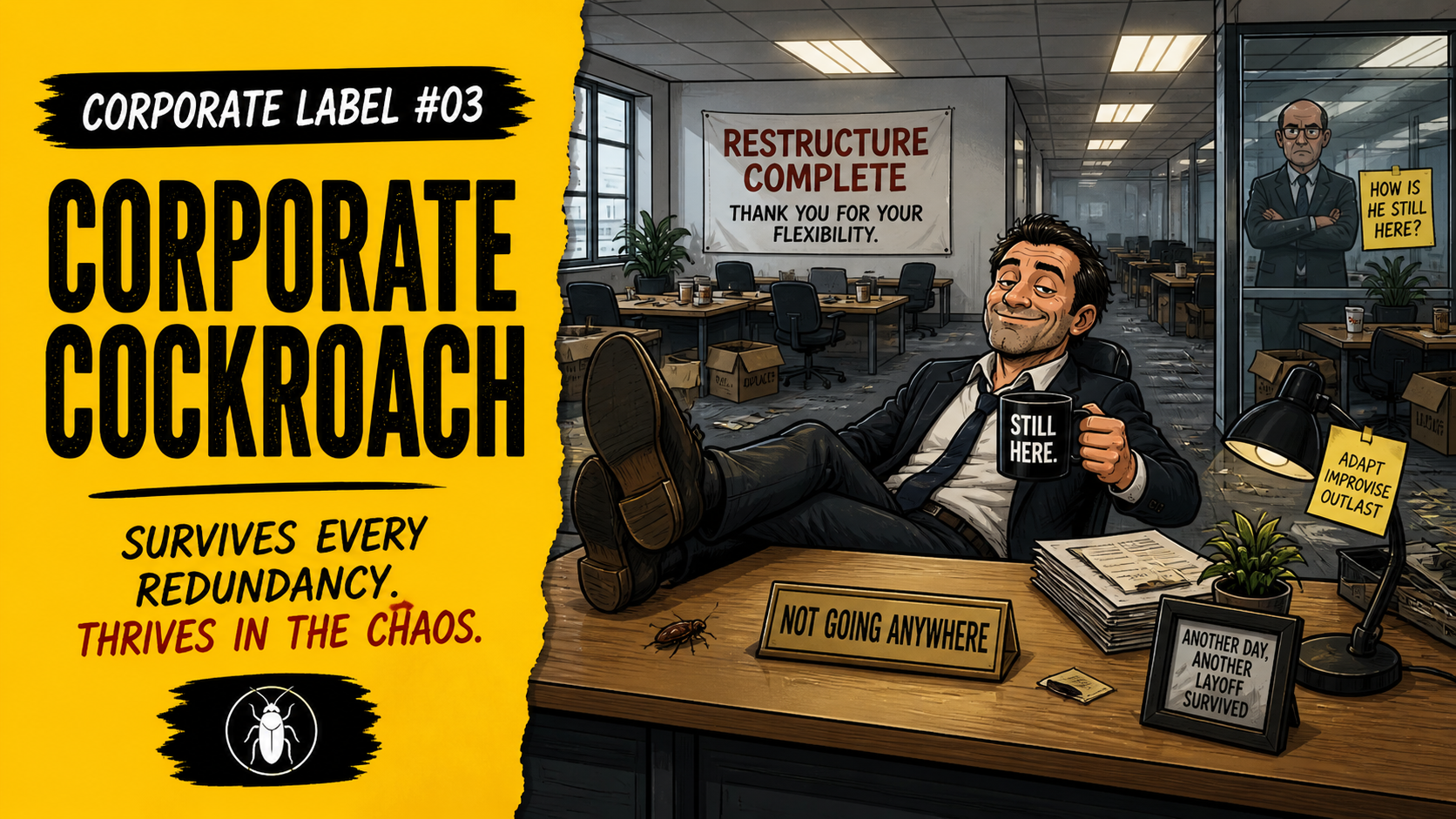
Ever heard someone described as a “Corporate Cockroach”?
It’s not subtle—and it’s definitely not kind.
This workplace label is used for employees who somehow survive every round of layoffs, restructures, and “strategic realignments”… no matter what happens around them.
In this guide, we break down what a Corporate Cockroach really means, the signs to watch for, and why these individuals always seem to stick around.
What is a Corporate Cockroach?
A corporate cockroach is an employee who consistently survives layoffs, restructures, and organisational change, often by staying low-profile, adaptable, and non-threatening within the workplace.
Common Traits of a Corporate Cockroach
- Stays under the radar during major changes
- Avoids conflict, visibility, and risk
- Adapts quickly to new leadership or direction
- Rarely stands out—but never disappears
- Seen as “safe” rather than exceptional
👉 They’re not the loudest, smartest, or most visible…
But they’re almost always still there.
Where Did the Term Come From?
The phrase “Corporate Cockroach” comes from the well-known idea that cockroaches can survive almost anything—from harsh environments to major disruptions.
In the workplace, the term evolved into corporate slang for employees who:
- Outlast others during redundancy rounds
- Remain unaffected by organisational chaos
- Quietly navigate change without attracting attention
👉 It’s dark humour—but it reflects a real pattern in many offices.
7 Signs You Work With a Corporate Cockroach
This is where it gets uncomfortably accurate.
You might be dealing with one if:
- They’ve been through multiple layoffs… and are still there
- Their role is unclear—but never questioned
- They adapt instantly to new managers or priorities
- They avoid taking strong positions or risks
- They rarely stand out—but are never selected for cuts
- They seem unaffected by workplace chaos
- They’re always “somehow still here”
👉 If everyone else is going… and they’re not…
There’s usually a reason.
⚠️ Is Being a Corporate Cockroach a Bad Thing?
It depends on perspective.
✅ Advantages:
- High job security
- Resilience during change
- Strong adaptability
❌ Downsides:
- Limited recognition
- Slower career growth
- Perception of being “replaceable but persistent”
👉 Survival doesn’t always equal success.
How to Avoid Being Labelled a Corporate Cockroach
If you don’t want this label attached to you:
1. Take Visible Ownership
Don’t just survive—contribute visibly.
2. Show Value, Not Just Stability
Being “safe” isn’t enough for progression.
3. Engage in Decisions
Avoiding everything can work short-term—but limits growth.
4. Build Influence
Visibility matters just as much as performance.
👉 Different labels… same workplace reality.
Related Corporate Labels
If this sounds familiar, you’ll recognise these too:
- Cubicle Rat → lives in spreadsheets, eats at the keyboard
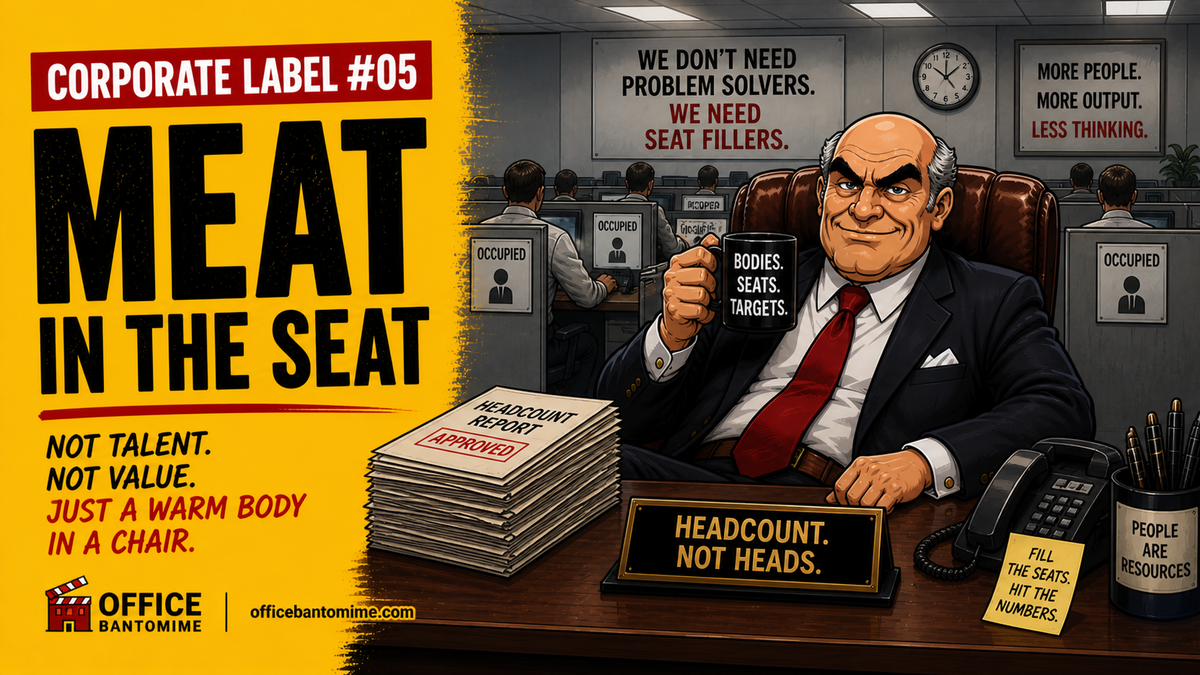
- Corporate Drone → follows process, no questions asked
- Meeting Ghost → attends everything, says nothing
👉 Explore the full Corporate Labels series.
 James Mason
 James Mason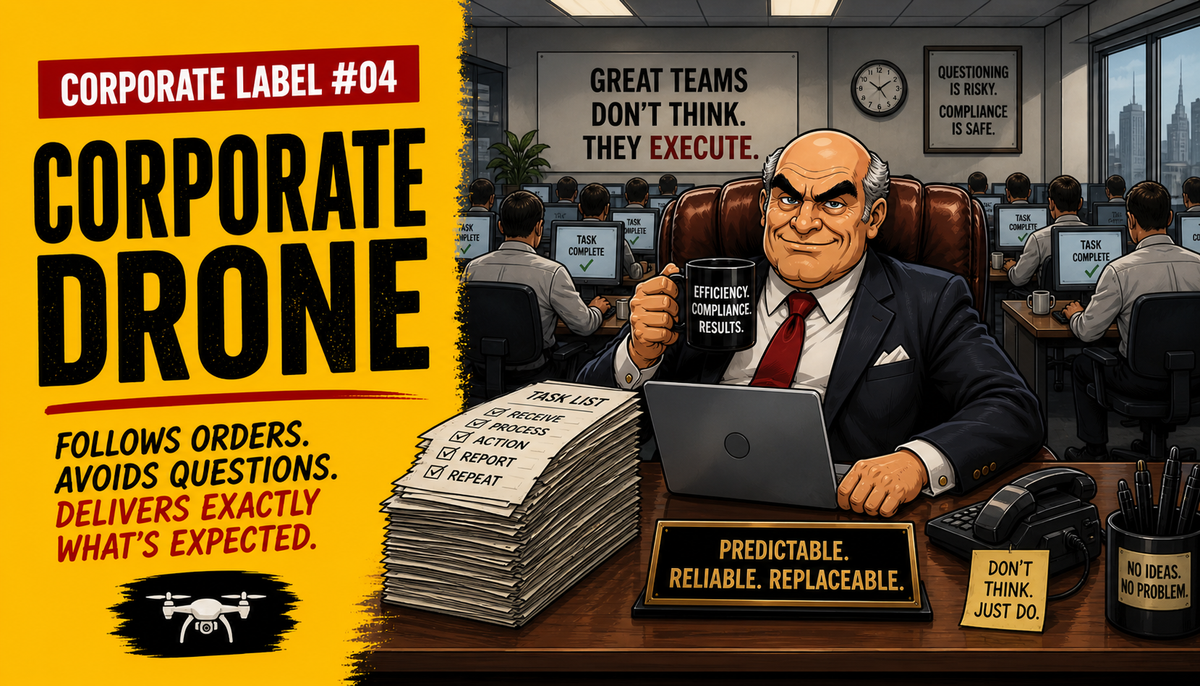
People Also Ask
Why do some employees survive every redundancy?
Employees who stay adaptable, low-risk, and non-confrontational are often seen as safer to retain during organisational change.
Is a corporate cockroach a real term?
Yes—while informal, it’s commonly used in workplace humour to describe employees who outlast layoffs and restructuring.
Is being a corporate cockroach good or bad?
It can be beneficial for job security, but may limit recognition, influence, and career progression.
How do you stop being seen this way?
Increase visibility, take ownership, and contribute more actively to decisions and team direction.
Final Thought
The Corporate Cockroach isn’t the best performer.
They’re not the loudest voice in the room.
👉 But when everything changes…
They’re still there.
And in some workplaces—
That’s exactly what gets rewarded.


