
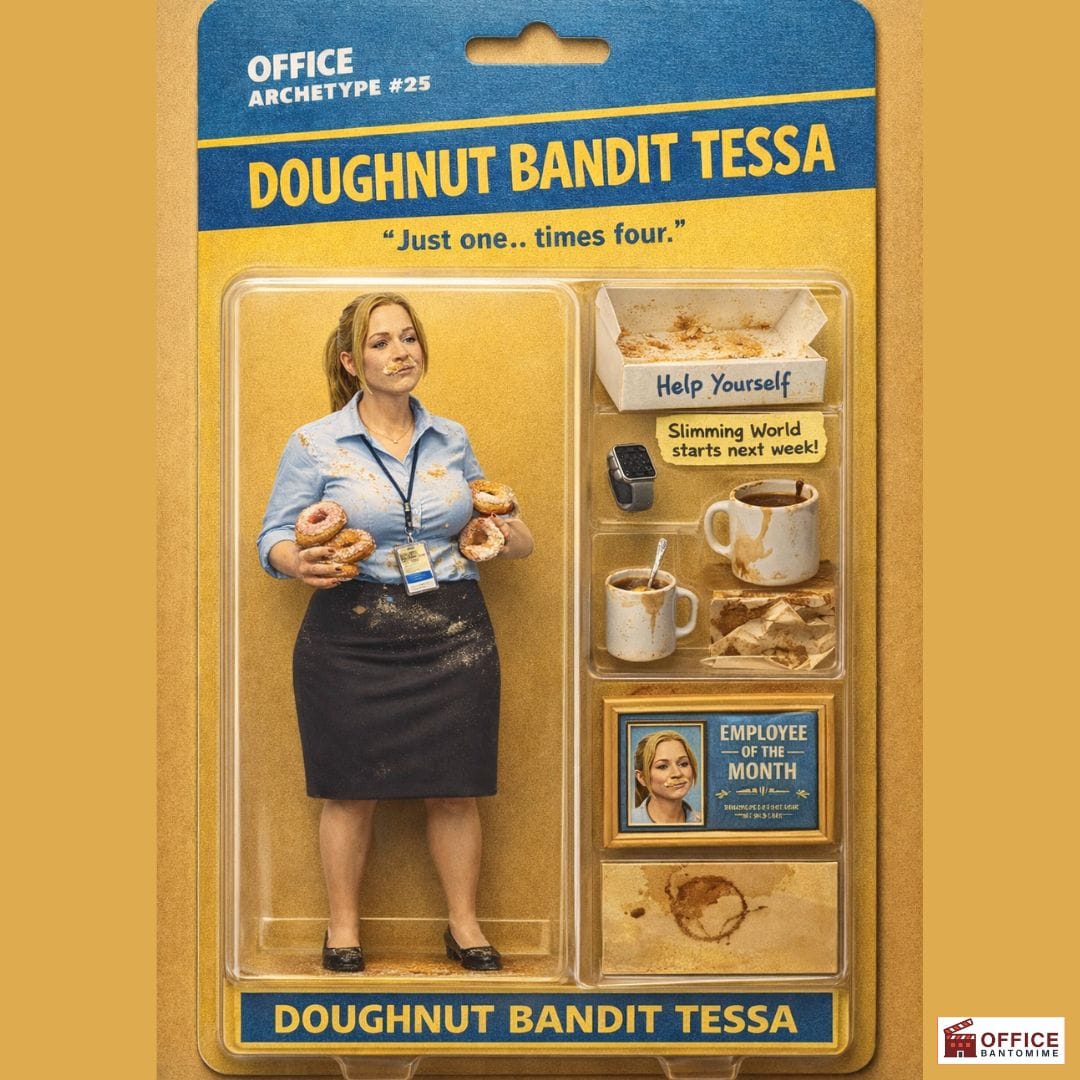
Doughnut Bandit Tessa: The Office Treat Thief We All Know
Doughnut Bandit Tessa is the office treat thief who always gets there first. From “just one” to four, here’s how to spot her — and stop your break room becoming a bakery crime scene.

The Office Coworker Who Always Takes the Last Doughnut
First-Come
Every office has one — the coworker who somehow arrives exactly when snacks appear and leaves nothing but crumbs behind. Doughnut Bandit Tessa isn’t aggressive. She’s just faster, hungrier, and mysteriously present whenever free food lands in the break room.
If your team’s birthday cakes vanish before you’ve poured your coffee, you already know her.
The Snapshot
Tessa never brings the doughnuts.
She just happens to be there.
Early.
Waiting.
She doesn’t take one.
She takes “just a small one.”
Then another small one.
Then she halves one.
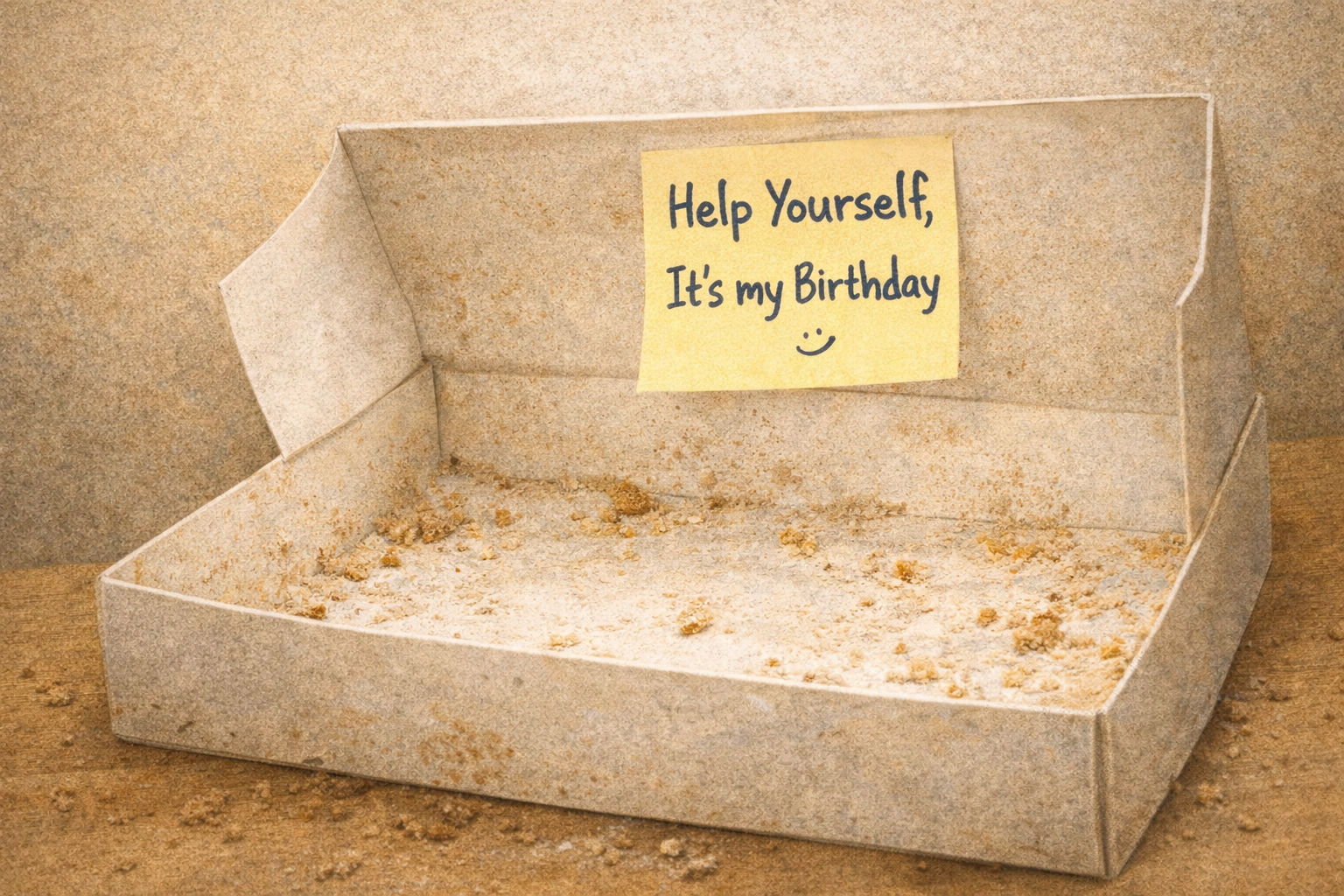
By 10:15 am, the box looks like a crime scene.
And somehow…
She’s still chewing when the latecomers arrive.
Core Behaviour
You’ll recognise Doughnut Bandit Tessa immediately:
- “Oh, I didn’t realise they were for everyone.”
- Takes the best flavour first.
- Leaves the plain ones.
- Says, “I’ll just try a bit.”
- Knows exactly when birthday cakes arrive.
- Disappears when it’s her turn to contribute.
She laughs it off.
But she’s always first at the table.
Workplace Red Flags
🚩Red flag #1:
She hovers when someone walks in carrying a bakery box.
🚩Red flag #2:
She cuts a doughnut in half — and somehow keeps both halves.
🚩Red flag #3:
She says, “Calories don’t count at work.”
🚩Red flag #4:
She’s suddenly “on a diet” the week it’s her turn to bring treats.
🚩Red flag #5:
She’s joining Slimming World next week, or at least one day
What’s Actually Going On (The Psychology)
Tessa isn’t greedy.
She’s opportunistic.
Office treats are low-risk, high-reward wins.
Free food.
Zero consequences.
A small social victory.
It’s not really about the doughnuts.
It’s about impulse control.
And the familiar promise of,
“I’m starting Slimming World on Monday.”
Or,
“WeightWatchers begins tomorrow.”
Tomorrow is always the reset.
But today still counts as “just one.”
In shared environments, small self-serving habits get noticed quickly.
Food is one of the fastest ways people reveal how they operate when no one is formally watching.
How To Deal With Doughnut Bandit Tessa (Without Starting a Pastry War)
You don’t shame her.
You structure the system.
- Put treats out at a set time.
- Cut everything evenly beforehand.
- Use plates instead of open boxes.
- Call out “One each to start” publicly.
- Or better — rotate the treat duty clearly.
Most food theft thrives in vagueness.
Clarity removes temptation.
7 Signs You Work With a Doughnut Bandit
- They take the best flavour first.
Chocolate? Gone. Jam-filled? Disappeared. You’re left with plain. - They say, “I’ll just have half”… and somehow keep both halves.
- They hover while pretending to chat.
Casual conversation. Strategic positioning. - They never bring treats themselves.
But they’re deeply committed to sampling everyone else’s. - They’re always “starting Slimming World on Monday.”
Today doesn’t count. Tomorrow is discipline. - They’re still chewing when the latecomers arrive.
And say, “Oh… were you wanting one?”
Shared food is often the smallest test of fairness in a team. When minor behaviours repeatedly irritate others, trust erodes quietly long before formal conflict appears.
Final Thought
Doughnut Bandit Tessa isn’t the worst person in the office.
She’s just the fastest.
But small behaviours reveal bigger patterns.
If someone ignores the rules over doughnuts…
They probably ignore them elsewhere, too.
And in workplaces, that’s never just about pastries.
Frequently Asked Questions About Doughnut Bandit Tessa
What is a Doughnut Bandit in the workplace?
A Doughnut Bandit is the coworker who consistently takes more than their fair share of shared office treats. They are usually first to appear when food arrives and rarely the one who brought it.
Why do some employees take all the office snacks?
It is rarely about hunger. More often it is impulse, opportunity, or simple "if it is there, I will have it" thinking. When there is no clear system, people default to first-come, first-served.
Is taking extra office food considered unprofessional?
On its own, it seems small. But repeated small oversteps can signal bigger issues around fairness, awareness, and consideration within a team. Little habits tend to reveal bigger patterns.
How can you stop coworkers from taking all the treats?
Structure beats frustration. Set a clear time to open the box, portion items evenly, rotate treat duties, and say "one each to start." When expectations are obvious, the problem usually shrinks.
What does food behaviour say about workplace culture?
Shared food reveals team dynamics quickly. Fair sharing reflects trust and mutual respect. Regular hoarding or opportunistic behaviour often points to unclear expectations or a culture where small selfish habits go unchecked.
Office Snack Etiquette: The Unwritten Rules
Shared treats can boost morale — or quietly irritate everyone.
Basic snack etiquette in the workplace usually means:
- Take one to start
- Wait until everyone has had a chance
- Contribute occasionally
- Avoid hovering
- Don’t claim leftovers before lunch
Small habits protect team harmony more than most policies do.
Explore More Office Archetypes
 James Mason
 James Mason
 James Mason
 James Mason