

Office “End-of-Day” Debbie: The Colleague Who Leaves Early Every Single Day
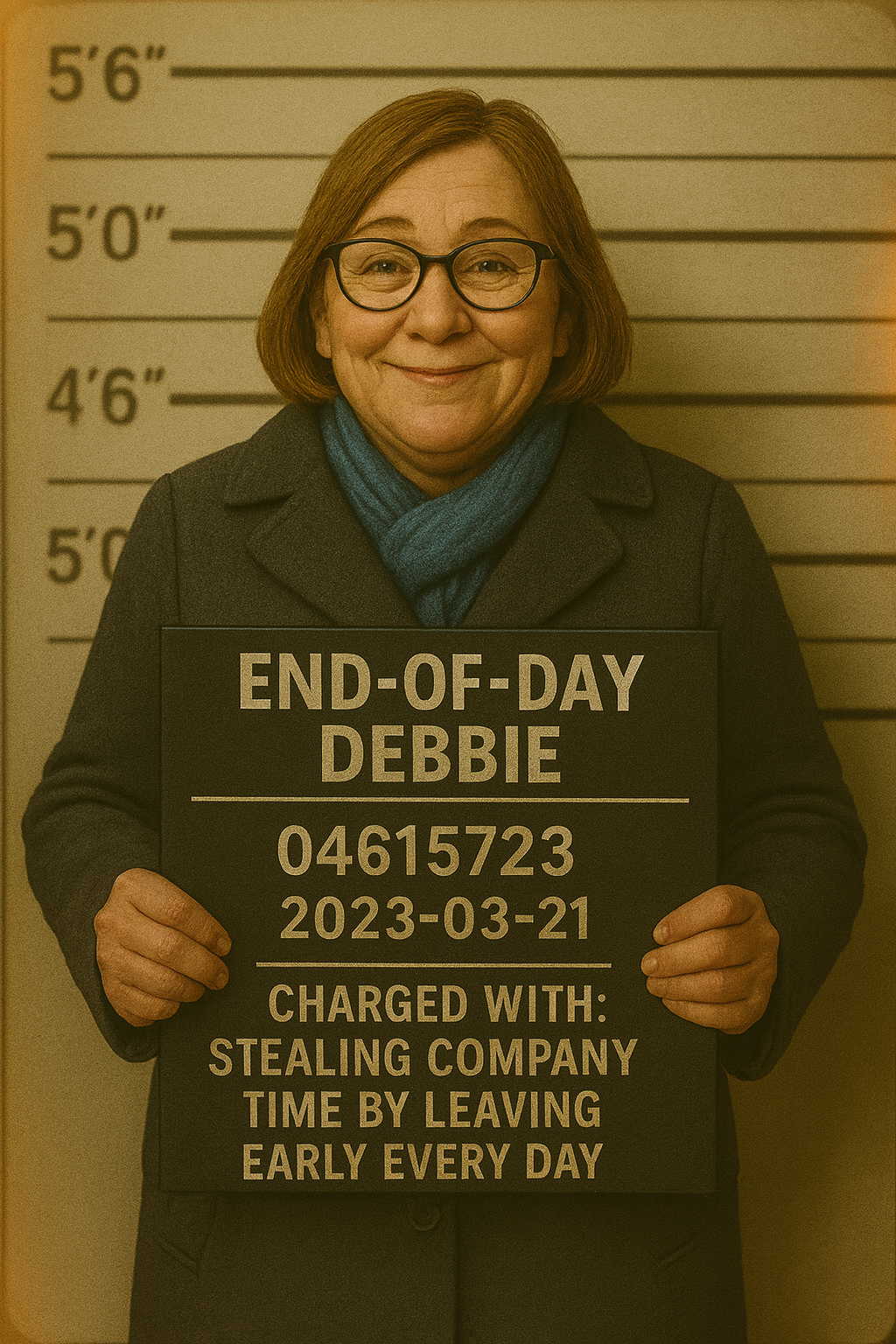
Office “End-of-Day” Debbie is officially charged for leaving early every day. A mugshot exposing the quiet art of time theft, coat-grabbing, and the 4:45pm vanish.

Welcome to the Office Mugshot Collection – Series 1, where workplace irritations are finally documented, processed, and quietly judged.
Today’s suspect is the master of the early exit.
The colleague who treats 4:45 pm as a suggestion.
The woman who is never around when something “quick” comes in at 4:58.
Meet Office “End-of-Day” Debbie.
 James Mason
The Crime: Leaving Early (Every Single Day)
Debbie doesn’t rush.
She doesn’t announce it.
She doesn’t even look guilty.
She simply isn’t there anymore.
At around 4:46 pm, Debbie begins her departure ritual:
- Laptop closed
- Bag packed
- Scarf on
- The chair pushed in with professional finality
By 4:52 pm, she has fully vanished.
Ask where Debbie and someone will say:
“I think she logged off…”
Of course she did.
James Mason
Case File Highlights (HR Notes)
CASE FILE NO: 2025-EOD-004
- Time of offence: 16:47
- Location: Desk nearest the exit
- Victims: Everyone is still pretending to work
- Method: Polite disappearance
- Motive: “I’ve done my hours” (unverified)
Witnesses describe her expression as calm, friendly, and deeply satisfied.
Security footage shows Debbie checking the time at 4:44 pm and nodding.
James Mason
Previous Incidents
- Logged off while still marked “Available” on Teams
- Claimed she was “jumping to another meeting” and never returned
- Packed her bag during someone else’s sentence
- Sent emails the next morning marked “Sent last night”
- Once left so quietly, people assumed she’d never arrived
Debbie has become an unofficial clock:
“If Debbie’s gone, it’s basically home time.”
Mugshot Summary
Debbie was apprehended at 09:07 am, after cheerfully saying:
“Morning! Everyone alright?”
Her mugshot shows:
- One relaxed smile
- One scarf is already emotionally committed to leaving
- The confidence of someone who has never stayed late
She has officially been BOOKED and charged with:
Stealing Company Time by Leaving Early Every Day
Sentence
Debbie has been ordered to:
- Remain visible until 5:00 pm
- Not pack her bag before 4:59
- Sit furthest from the exit
- Verbally confirm her departure
HR believes this will “raise awareness.”
Debbie believes it will “wrap up soon anyway.”
Final Thoughts
If you’ve ever looked up at 4:55 pm and realised Debbie has already emotionally moved on to tomorrow, this mugshot is for you.
End-of-Day Debbie is officially Case 004 in the Office Mugshot Collection — proof that not all workplace crimes are loud.
Some just put their scarf on…
…and quietly leave.
FAQ: End-of-Day Debbie (Leaving Early at Work)
Why do colleagues leave work early?
Common reasons include flexible working arrangements, finishing tasks early, commuting needs, childcare or caring responsibilities, appointments, and workplace culture where leaving on time (or slightly before) is normal.
Is leaving work early always time theft?
No. If someone has flexible hours, has completed their work, or has an agreed arrangement with their manager, leaving early can be legitimate. It becomes a problem when expectations are unclear, coverage is impacted, or hours are consistently misrepresented.
How should managers handle employees who leave early every day?
Clarify expectations for core hours, availability, and handovers. Check if a flexible arrangement exists. If performance or coverage is affected, agree a practical plan (core hours, deliverables, handover routine) and review it after a few weeks.
What are signs someone is leaving early without telling anyone?
Logging off while still marked available, packing up well before the end of the day, dodging late requests, disappearing before handovers, and repeatedly being unreachable in the final 15–30 minutes.
How can teams avoid resentment about people leaving early?
Make working agreements visible: core hours, response expectations, and handover routines. Focus on outcomes rather than presenteeism, and share late coverage fairly. Resentment usually comes from ambiguity and uneven load sharing.
What is an office archetype?
An office archetype is a recognizable workplace character type based on common habits and behaviours. In workplace humour, archetypes exaggerate these traits for comedic effect—like the colleague who always leaves early.


