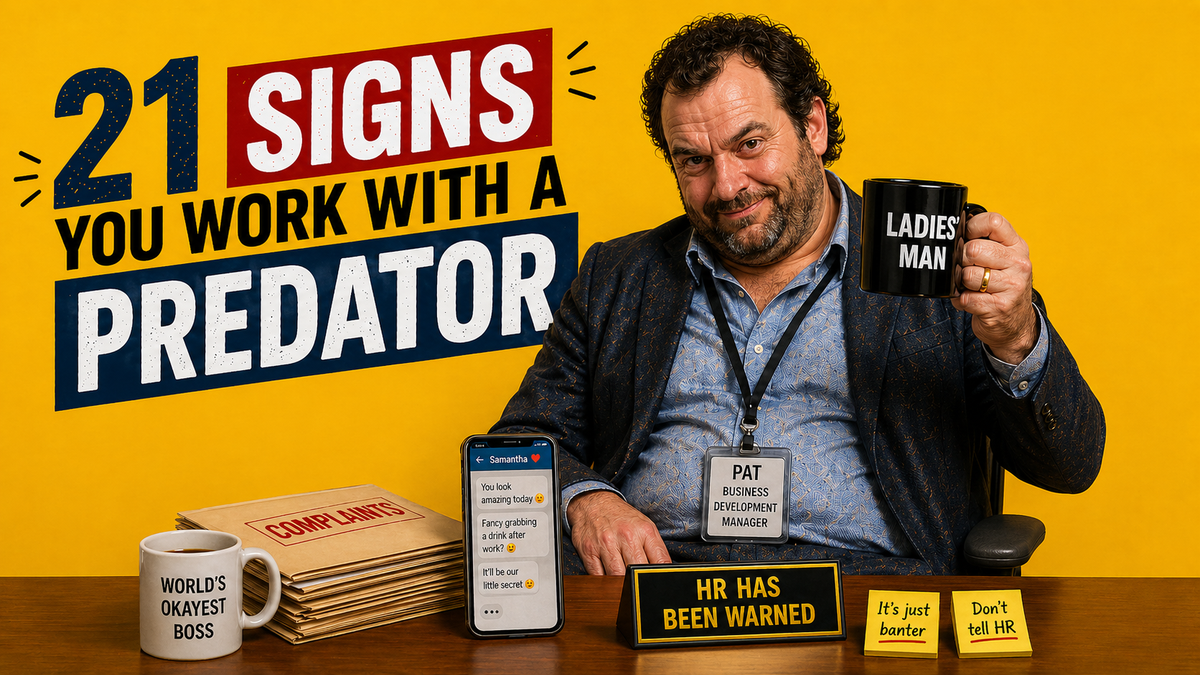

21 Signs You Work With a Stalker
Working with a creepy coworker? Discover the 21 signs of a workplace Stalker, from unsettling behaviour and awkward intensity to obsessive observation and hidden motives.

INTRODUCTION
At first, you think it’s a coincidence.
Then you notice:
- He somehow knows your lunch routine
- Appears everywhere you are
- Remembers tiny details you never told him
- And always seems to be “accidentally nearby”
Welcome to the workplace, Stalker.
The coworker who:
- Watches too closely
- Asks too many questions,
- Remembers everything
- And somehow makes every interaction feel deeply uncomfortable…
…while technically still acting “nice.”
That’s what makes this archetype so unsettling.
Because the red flags don’t always arrive loudly.
Sometimes they arrive smiling politely with a coffee in hand.
21 SIGNS YOU WORK WITH A “STALKER”
1. They know things you never told them
And you have no idea how.
2. You “accidentally” see them everywhere
Commute. Kitchen. Car park. Repeatedly.
3. They remember tiny personal details
Far too well.
4. Conversations feel strangely intense
Even when casual.
5. They watch people constantly
Observing more than participating.
6. They ask overly personal questions
Disguised as friendliness.
7. They know your routines
Lunch times included.
8. They appear socially awkward but persistent
The awkwardness never stops them.
9. They make people quietly uncomfortable
Without technically breaking rules.
10. They linger around desks too long
Especially yours.
11. They somehow know who you talk to
And when.
12. They overanalyse interactions
A smile becomes “a signal.”
13. Mystery is their entire personality
Unfortunately, it isn’t attractive.
14. They always seem to be “checking in”
Nobody asked them to.
15. Their friendliness feels forced
Like, there’s always another motive.
16. They notice changes instantly
Haircuts. Mood. Schedules. Everything.
17. They make eye contact for too long
Long enough to feel wrong.
18. You feel relieved when they’re off work
That says enough.
19. Other coworkers quietly notice it too
But nobody wants to say it first.
20. They collect information constantly
Even when irrelevant.
21. Your instincts tell you something feels off
And instincts matter.
FOLLOW-UP
The uncomfortable reality is this:
Not every workplace creep immediately crosses a formal HR line.
Some simply:
- Hover too much
- Observe too much
- Know too much
- And create constant discomfort without saying anything that is openly inappropriate.
That grey area is exactly why this archetype unnerves people.
Because even when they’re technically behaving…
something still feels wrong.
WHY THIS HAPPENS
Some workplace Stalkers:
- Struggle socially
- Misunderstand normal interactions
- Confuse politeness with emotional connection
- Or become obsessed with familiarity and routines.
Others enjoy:
- Emotional control
- Attention
- Manipulation
- Or creating discomfort while remaining “professionally safe.”
And sometimes?
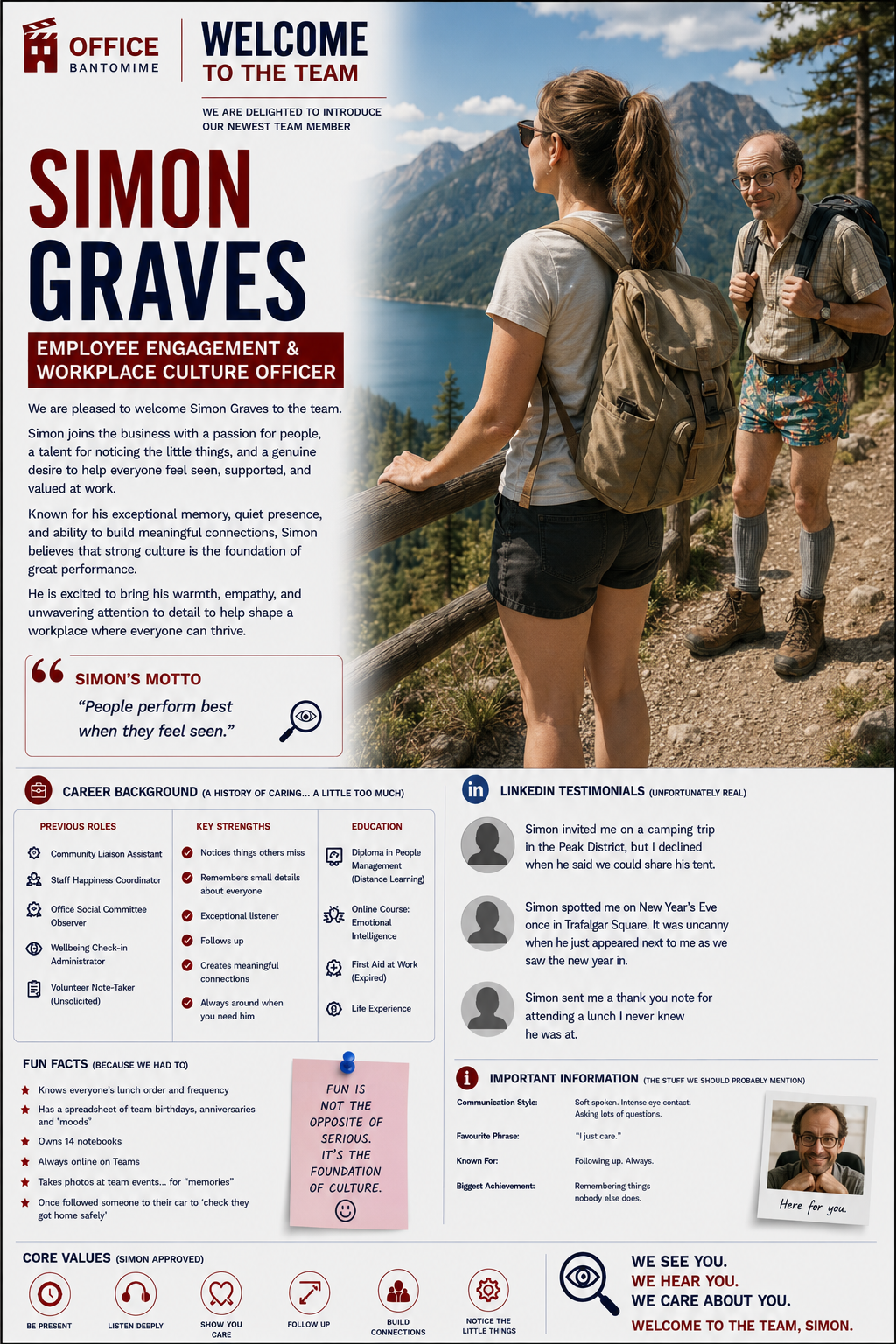
People like Simon Graves appear.
The smiling workplace culture expert who:
- Notices everything,
- Remembers everyone
- Follows up constantly
- And somehow turns “employee engagement” into a survival thriller.
That’s what makes characters like Simon so unsettling.
They don’t always appear aggressive.
They appear helpful.
THE SIMON GRAVES FACTOR
Simon Graves is the type of workplace character who:
- remembers your birthday without being told
- appears in random places unexpectedly
- asks deep personal questions too early
- and somehow turns “checking in” into psychological warfare.
The smile never fully removes the discomfort.
Because the problem isn’t always what’s being said.
It’s the intensity behind it.
HOW TO DEAL WITH THEM
✔ Trust your instincts
If interactions repeatedly feel uncomfortable, don’t ignore it.
✔ Keep communication professional
Avoid oversharing personal details.
✔ Limit unnecessary engagement
You do not owe extended conversations.
✔ Document anything concerning
Especially repeated patterns.
✔ Don’t downplay your discomfort
“Technically nice” people can still create unsafe environments.
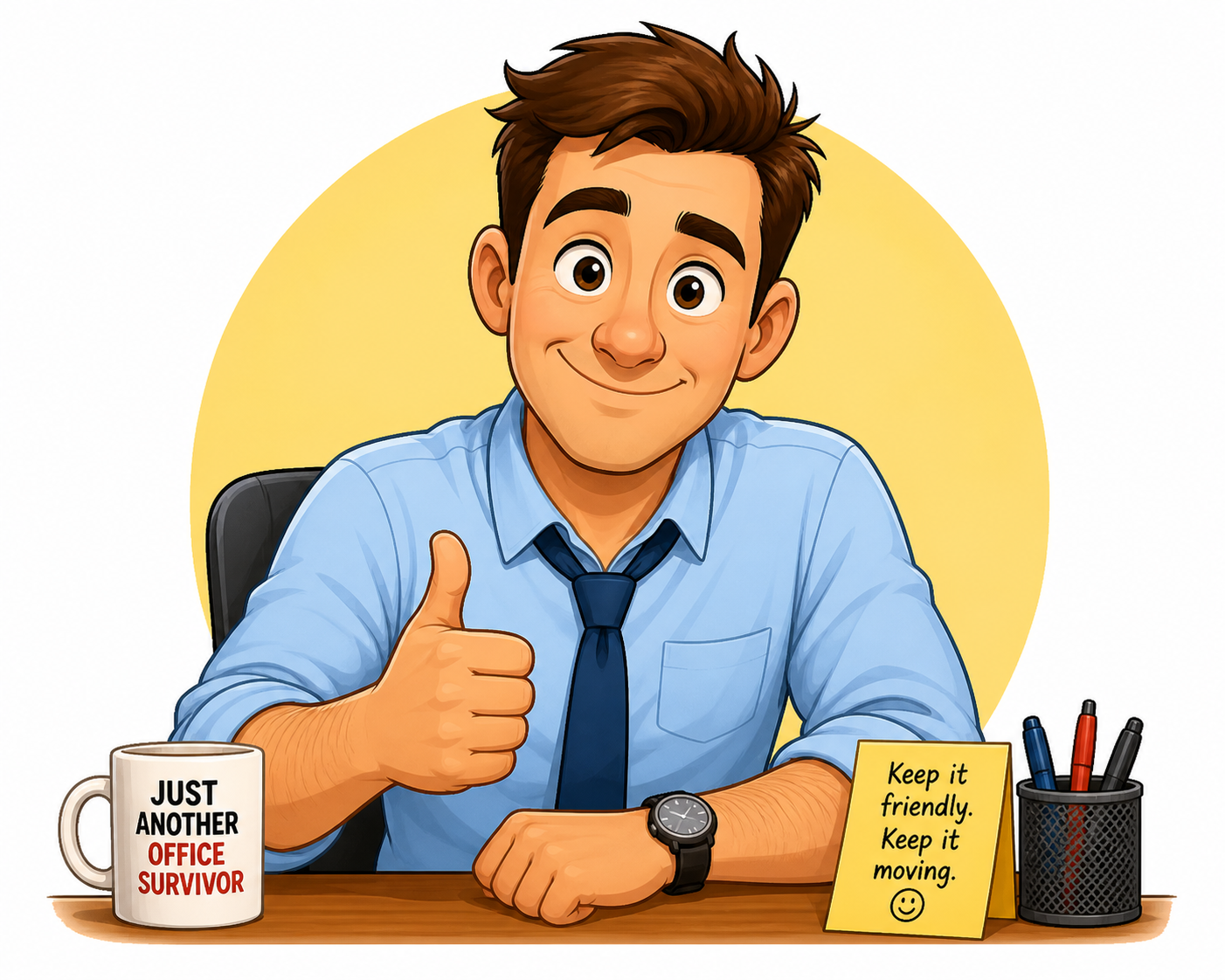
That’s what makes this archetype difficult.
The Stalker often operates in the uncomfortable grey area between:
- ✔ “technically friendly”
- ✔ socially awkward
- ✔ emotionally intense
- ✔ and genuinely unsettling
If somebody repeatedly:
- ✔ monitors your routines
- ✔ gathers personal information
- ✔ creates discomfort
- ✔ appears unexpectedly
- ✔ or makes interactions feel psychologically invasive
…pay attention to that feeling.
Even if the individual claims they’re:
- ✔ “just being nice”
- ✔ “checking in”
- ✔ “trying to help”
You are NOT required to tolerate persistent discomfort just because somebody is polite while causing it.
- ✔ keep communication professional
- ✔ avoid oversharing personal information
- ✔ document concerning incidents if patterns emerge
- ✔ trust repeated instincts
If they say something inappropriate or make you feel unsafe:
- ✔ escalate to your line manager or HR immediately
If the individual IS your line manager:
- ✔ escalate directly to HR
If the individual works in HR:
- ✔ seek external advice through ACAS or legal guidance
❓ Workplace Stalker FAQ
What is a workplace stalker?
A workplace stalker is someone who becomes overly observant, intrusive, emotionally intense, or repeatedly present in ways that create discomfort for coworkers.
Can someone be creepy without breaking HR rules?
Yes. Some individuals create ongoing discomfort through behaviour patterns rather than direct policy breaches.
Should you trust your instincts at work?
Absolutely. Repeated discomfort around somebody should never be ignored, especially if patterns continue over time.
What should you do if a coworker makes you uncomfortable?
Keep communication professional, document concerning incidents, and escalate through management, HR, ACAS, or legal support where necessary.
 James Mason
 James Mason
 James Mason
 James Mason