

21 Signs You Work With a Bully (And You Already Know It)
21 signs you work with an office bully. From meeting insults to intimidation tactics, spot the red flags and learn how to handle toxic co-workers without losing your sanity.

Let’s not dress it up — every office has one.
Not loud enough to get fired.
Not senior enough to be your boss.
But somehow… always managing to make work feel worse than it needs to be.
The office bully doesn’t just create tension — they drain energy, confidence, and morale from everyone around them.
And the worst part?
They usually think they’re the ones “keeping standards high.”
If this feels familiar… you’re probably already thinking of someone.
21 Signs You Work With a Bully
1. Insults coworkers in meetings
Not even subtle. Little digs disguised as “feedback” — always with an audience.
2. Obnoxious for no reason
Loud, dismissive, and unnecessarily aggressive — even when the situation doesn’t call for it.
3. Demands that tasks are carried out their way
Not your manager. Not accountable. Still acting like the final authority.
4. Talks over people constantly
Conversations aren’t discussions — they’re interruptions.
5. Uses intimidation instead of collaboration
Volume up. Respect down.
6. Picks on quieter team members
Targets people less likely to push back.
7. Publicly calls out mistakes
Because embarrassment is apparently a management tool now.
8. Never admits they’re wrong
Even when it’s obvious. Especially when it’s obvious.
9. Acts differently around senior management
Suddenly polite. Almost like a completely different human.
10. Takes credit for other people’s work
Magically appears when success is mentioned.
11. Blames others when things go wrong
Disappears just as quickly when things fail.
12. Creates tension in every meeting
You can feel it the second they start talking.
13. Uses phrases like “Just do it” or “I don’t care how”
Zero interest in workload, context, or reality.
14. Makes people second-guess themselves
Even when they were confident five minutes ago.
15. Rolls their eyes or shows visible frustration
Professionalism isn’t their strength.
16. Interrupts with “That’s not how we do it”
Even when it literally is how it’s done.
17. Pushes urgency on everything
Everything is critical. Nothing actually is.
18. Leaves people feeling worse after conversations
You don’t leave discussions — you recover from them.
19. Avoids accountability completely
Funny how responsibility never lands on them.
20. Thrives on control, not results
It’s not about outcomes — it’s about dominance.
21. Everyone knows… but no one says anything
The clearest sign of all.
Why Office Bullies Exist
They’re not confident — they’re compensating.
Most workplace bullies operate from:
- Insecurity
- Lack of control elsewhere
- Poor leadership examples
- Or… never being challenged
And when no one pushes back, the behaviour sticks.
How to Deal With an Office Bully (Without Losing Your Mind)
Let’s be practical — you don’t fix them overnight.
But you can protect yourself:
- Don’t engage emotionally
They feed off reactions. Stay neutral. - Document everything
Especially public behaviour and repeated patterns. - Set calm, clear boundaries
Short. Direct. No drama. - Loop in management when needed
Not gossip — facts. - Support your team quietly
Bullies lose power when people stick together.
When It Crosses the Line
There’s a difference between “difficult” and unacceptable.
If it becomes:
- Harassment
- Repeated intimidation
- Targeted behaviour
That’s not workplace personality — that’s a problem worth escalating.
 🗄️ CONFIDENTIAL DRAWER
(Open Carefully)
If this one feels familiar… don’t ignore it.
“Yeah… this matters more than you think.”
🗄️ CONFIDENTIAL DRAWER
(Open Carefully)
If this one feels familiar… don’t ignore it.
“Yeah… this matters more than you think.”
💎 If this post hit a bit too close… this part actually matters.
Not everything at work is just “a strong personality” or “someone having a bad day.”
If someone consistently intimidates, undermines, or makes you feel small… that’s not normal workplace behaviour.
You’re not overreacting.
Here’s the bit most people don’t realise:
You don’t have to tolerate it to keep the peace.
A lot of people stay quiet because they don’t want to make things worse.
But staying quiet often makes the behaviour more comfortable — not less.
Instead, start here:
- ✔ Acknowledge it for what it is
- ✔ Keep records of what’s happening
- ✔ Set small, firm boundaries where you can
You don’t need to confront everything at once — but you also don’t need to accept it.
And the moment you stop normalising it… things start to shift.
- Stay calm — don’t give them the reaction they’re looking for
- Document behaviour — patterns matter
- Don’t isolate yourself — speak to someone you trust
- Use formal channels if needed
- Protect your wellbeing — this isn’t “just work” if it’s affecting you
This kind of behaviour rarely stops on its own — but it becomes easier to manage once you stop accepting it as normal.
If this feels familiar… you don’t have to deal with it quietly.
Final Thought
The office bully survives on silence.
The moment people stop tolerating it?
Their influence disappears fast.
💬 Be honest… which one is yours?
Everyone has one. The bully. The micromanager. The drama queen.
Drop it in your head right now — you already know who it is.
 James Mason
 James Mason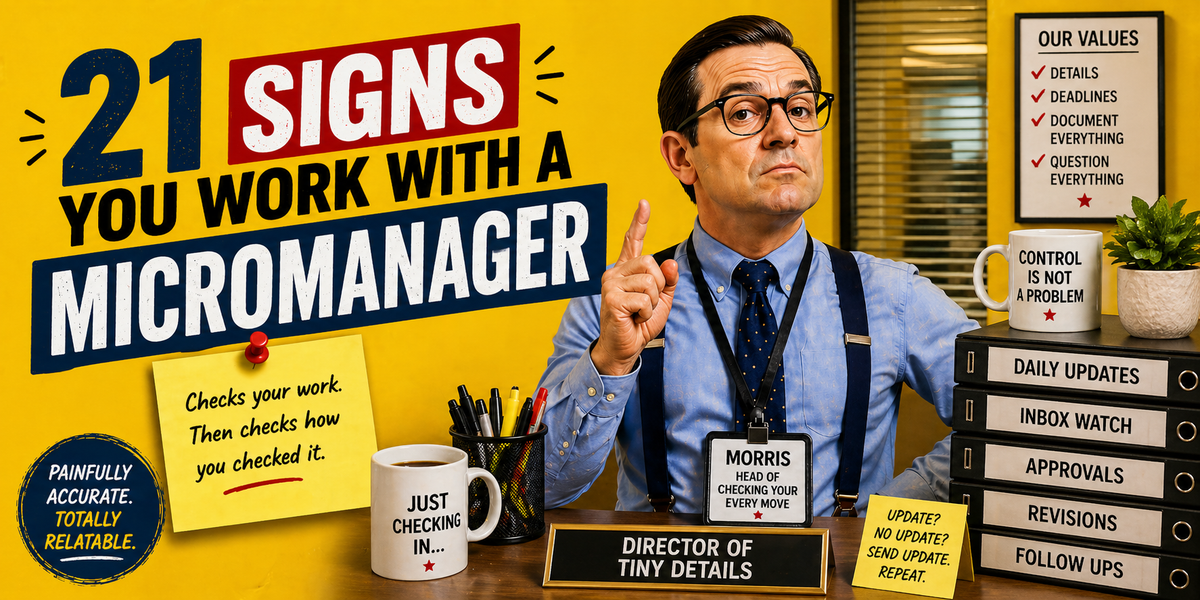
What is an office bully?
An office bully is a coworker who uses intimidation, criticism, or aggressive behaviour to control or undermine others. They create tension, target individuals, and rely on fear rather than collaboration.
Is a workplace bully always a manager?
No — many office bullies have no formal authority. They often act like they’re in charge, similar to a micromanager, which makes their behaviour harder to challenge.
Why do workplace bullies act this way?
Most workplace bullies are driven by insecurity, lack of control, or poor leadership habits. Their behaviour is usually more about them than the people around them.
What’s the difference between a bully and a difficult coworker?
A difficult coworker may be blunt or frustrating. A bully shows consistent, targeted behaviour designed to intimidate, undermine, or embarrass others.
How do you deal with a workplace bully?
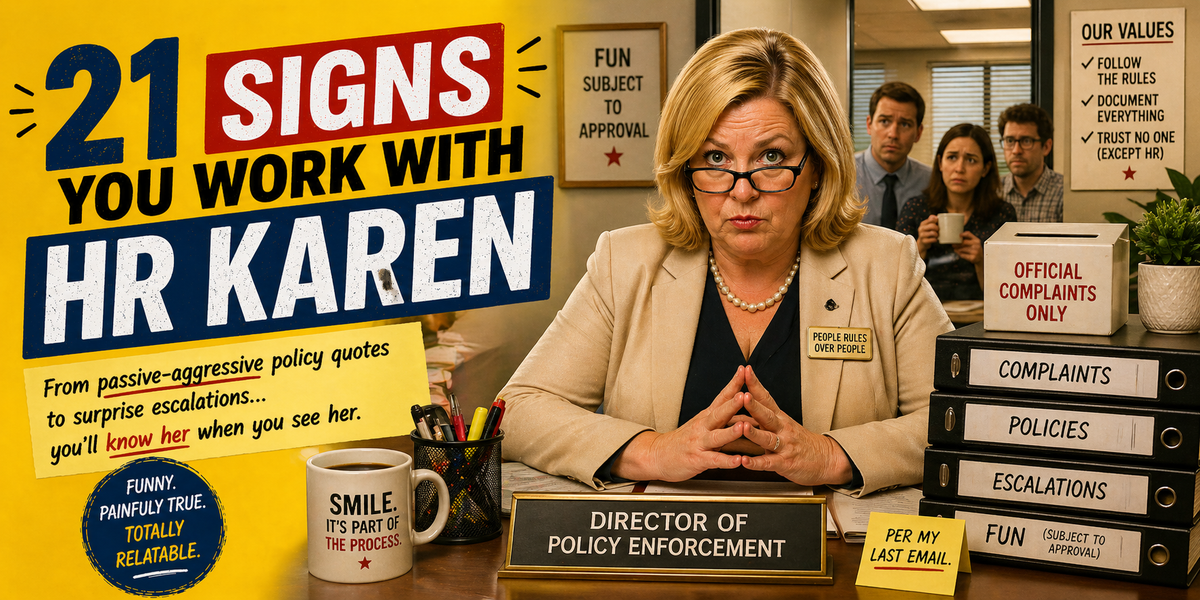
Stay calm, avoid emotional reactions, document behaviour, and set clear boundaries. If you’ve dealt with a HR Karen, you’ll recognise the pattern — control without accountability.
Can a workplace bully be stopped?
Yes — but usually not by one person alone. Bullies lose power when behaviour is documented, challenged appropriately, and made visible to management.
Should you report a workplace bully to HR?
If the behaviour is repeated, targeted, or affecting your wellbeing, then yes. Especially if it crosses into harassment or intimidation.
Why do managers sometimes ignore workplace bullies?
Because bullies can appear confident or productive on the surface. Without clear evidence, their behaviour may go unnoticed or dismissed.
Can workplace bullying affect mental health?
Absolutely. It can lead to stress, anxiety, reduced confidence, and burnout if left unchecked.
How can I get real support if this is affecting my mental wellbeing?
Start by talking to someone you trust — a colleague, manager, or friend outside work. If your workplace has HR or support programmes, use them and keep records. Don’t handle it alone — long-term bullying wears you down. If needed, seek professional support. Taking action isn’t overreacting — it’s protecting yourself.
Will more Office Archetypes be added?
Definitely. The workplace is full of characters — and we’re only just getting started.
🧠 How Toxic Is Your Workplace?
Tick what applies, then check your result below:
- ☐ Someone insults coworkers in meetings (+2)
- ☐ People feel tense in meetings (+2)
- ☐ One person dominates conversations aggressively (+3)
- ☐ Credit is regularly stolen (+3)
- ☐ You dread interacting with a specific person (+4)
📊 Your Score:
0–3 → 🟢 You're probably fine (for now)
4–8 → 🟠 Some toxic traits are creeping in
9+ → 🔴 This workplace is toxic — protect your energy
👉 Be honest — you already know where you land.


