
Are You Being Managed Out at Work? 10 Signs, Real UK Cases & How to Fight Back
Feeling side-lined or ignored at work? Learn how to spot the signs of being managed out, understand your UK rights, and use this step-by-step guide to protect your job—or exit on your terms.


On this page
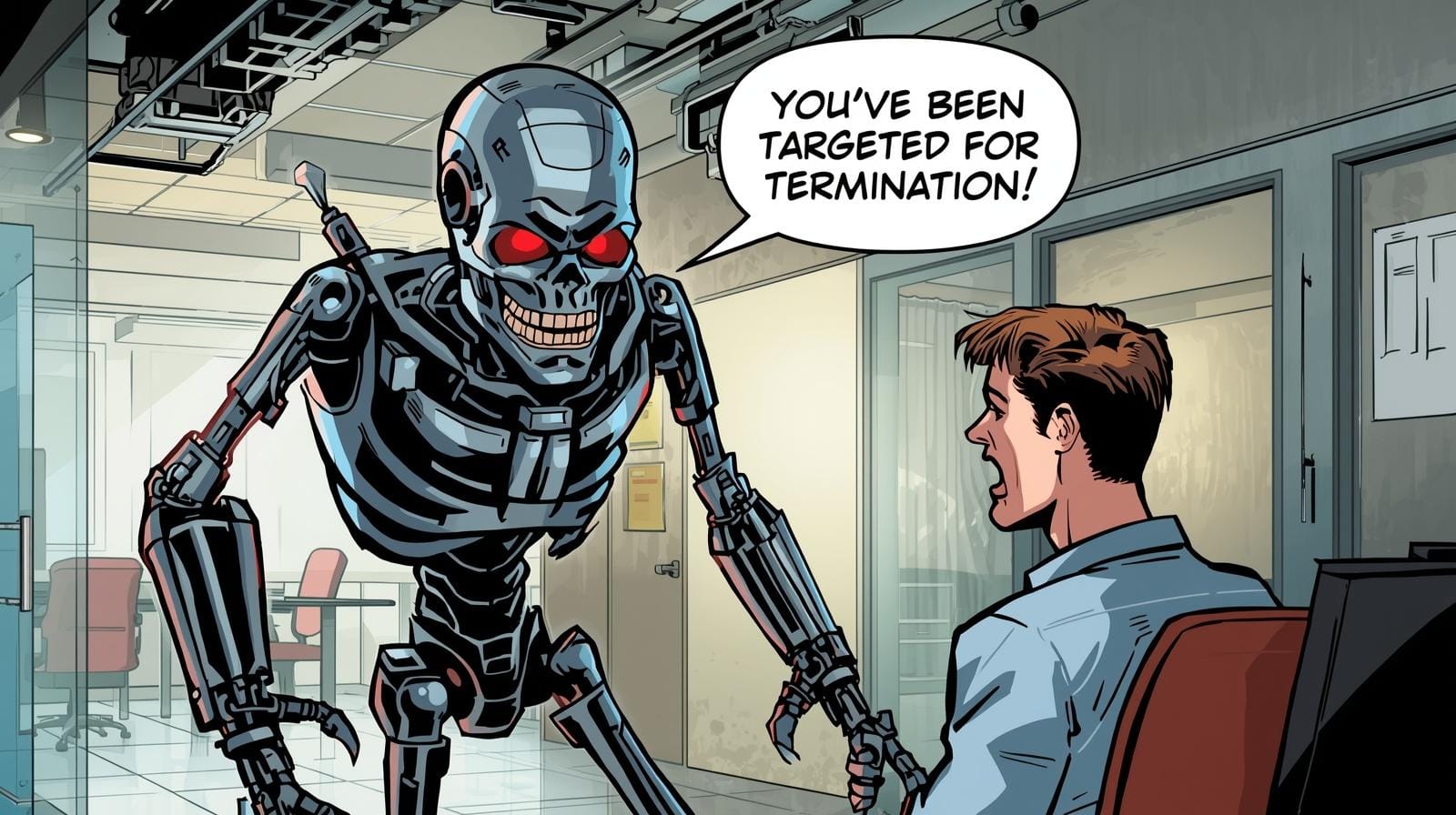
Let’s Be Real: “Managed Out” Is Just Corporate Ghosting in a Suit
Being managed out often isn’t about performance — it’s a symptom of deeper organisational dysfunction and one reason why work feels broken right now.
It starts quietly. You’re no longer looped into meetings. The projects dry up. Your once-chatty manager suddenly becomes email-only.
You haven’t done anything wrong—yet somehow, you’re being gently nudged toward the door. Welcome to the unspoken art of being “managed out.”
It’s not an official HR term, but in UK workplaces it’s as real as the office birthday card that never reaches your desk.
10 Signs You’re Being Managed Out at Work (UK Edition)
1️⃣ You’re quietly given fewer responsibilities.
That once-busy workload? Gone. Suddenly, you’re the “support act” while others grab centre stage.
2️⃣ Your ideas disappear into the void.
You speak, nods happen… then nothing. It’s like your words got left on mute.
3️⃣ Your colleagues are getting the red-carpet treatment.
They get praise, projects, visibility — you get “we’ll see next quarter.”
4️⃣ Management’s promises never materialise.
Training budgets “paused”, promotions “under review” — but somehow always for you.
5️⃣ You’re blocked from growth or side-stepped.
Opportunities vanish, even when you tick every box.
6️⃣ You’re being excluded (politely, of course).
Left off invites, project updates, or even the Friday doughnut run.
7️⃣ You’re suddenly on a “Performance Plan.”
Out of nowhere, you’re told you’re underperforming — with no prior warning or support.
8️⃣ Your role starts getting redefined.
New titles appear that sound suspiciously like your job… but “with AI integration” or “offshore collaboration.”
9️⃣ Communication dries up.
Once-chatty managers now keep things strictly formal or email-only.
🔟 You feel invisible.
Your contributions don’t get mentioned, your seat at the table shrinks, and your confidence starts to follow.
UK Reality Check: What’s Legal, What’s Not
Let’s ditch the myths. Yes, companies can manage performance—but only fairly, transparently, and consistently.
Here’s how UK employment law breaks it down (ACAS and GOV.UK are the go-tos):
- Capability & Performance:
Your employer must outline clear goals, offer support, and give you a fair chance to improve. Jumping straight to “you’re not meeting expectations” without evidence? Risky territory. - Unfair Dismissal:
After 2 years’ service, you’re protected. But if the reason involves discrimination, whistleblowing, or family-leave rights, you’re protected from day one. - Discrimination:
Protected characteristics (age, sex, race, disability, religion, etc.) cannot lawfully influence decisions. - Health & Illness:
Long-term illness? They must consider reasonable adjustments and medical advice before moving toward dismissal. - Whistleblowing:
Raise a public-interest concern and get punished? That’s automatic unfair dismissal. - Deadlines Matter:
Employment tribunal claims usually need to be filed within 3 months minus 1 day—and ACAS Early Conciliation comes first.
The “Stay Sane & Smart” Action Plan
Because panic-Googling at 1 a.m. doesn’t count as strategy.
- Document everything.
Dates, emails, meetings, promises, even the tone of “quick catch-ups.” Paper trails save jobs. - Ask for clarity in writing.
Request objectives, support plans, and review criteria. It’s professional—and keeps them accountable. - Politely request transparency.
Ask how promotions, projects, and bonuses are decided. Consistency should apply to everyone. - Use internal channels.
Start informal chats, then formal grievances if needed (ACAS Code-compliant). - SAR (power move).
A Subject Access Request under UK GDPR lets you see internal emails about you. Sometimes enlightening, often confirming. - Health first.
If illness or disability plays a part, request Occupational Health input and adjustments. - Seek support.
Union rep, Citizens Advice, or employment solicitor—don’t wait until the last minute. - ACAS Early Conciliation.
Stops the legal clock while you negotiate. - Negotiate exits wisely.
A “protected conversation” can lead to a settlement with payment, PILON, and reference. Get advice before signing. - Keep perspective.
Sometimes a strategic exit beats a toxic stay. Leave with dignity—and a stronger CV.
The Big Workplace “What Ifs”
“Can they single me out?”
Yes—but fairness is key. A “pool of one” redundancy must be justified and consulted on.
“Can they rename my role and re-advertise it?”
If your job still exists under another name or offshore, it may be a sham redundancy. Challenge it.
“Can AI make me redundant?”
If automation genuinely reduces the need for people, yes—but the process must still be fair. (26 % of UK workers fear AI-driven job loss.)
“What if management just dislikes me?”
Dislike isn’t illegal—but discrimination or retaliation is.
“I’ve been off sick—can I be fired?”
Not without proper medical assessment and reasonable adjustments. Otherwise, it’s a discrimination risk.
Real-World Wins (Proof It’s Not Hopeless)
Tesco “Fire and Rehire” Blocked
The Supreme Court ruled Tesco couldn’t dismiss staff to remove guaranteed pay benefits.
Williams v Compair Maxam (1982)
Redundancy selection must be transparent, consultative, and fair.
Eversheds v De Belin (2011)
Over-favouring one employee on maternity leave during scoring = discrimination.
Hendy Group v Kennedy (2023)
Redundancy was unfair because the employer ignored redeployment options.
Takeaway? Courts do call out dodgy tactics—documentation wins cases.
26 % of workers fear AI-related job losses (ACAS/YouGov 2025).
Redundancy rate mid-2025: around 0.36 % of employees (low, but real).
Questions You Can (and Should) Ask
- “What are my measurable objectives and timelines?”
- “What support or training will help me reach them?”
- “What criteria decide promotions or projects?”
- “Can we review redeployment options before redundancy?”
- “Can we discuss reasonable adjustments with Occupational Health?”
- “If redundancy is unavoidable, can we explore a protected conversation?”
Quick Reference Links






 Government Digital Service
 Government Equalities Office
Email Template to HR (Copy + Keep)
Subject: Clarification of Objectives and Support
Dear [Manager’s Name],
I’d like to confirm my objectives and available support for the coming review period, to ensure I’m meeting expectations and contributing effectively.
Could you please confirm:My current goals and success criteriaTraining or development plans in placeOpportunities where I can add further value
Many thanks,
[Your Name]
(Polite, factual, and creates a record—classic OB strategy.)
| Date | Event / Conversation | Who Was Involved | What Happened | Impact on You | Follow-Up / Action Taken |
|---|---|---|---|---|---|
| 10 Oct 2025 | Weekly catch-up | Manager | Told that my project would be reassigned “due to priorities,” but no clear reason given. | Felt sidelined and unsure about my workload or next steps. | Emailed to ask for clarification. |
| 16 Oct 2025 | Team meeting | Line Manager + HR | My suggestions were dismissed without discussion; decisions already made beforehand. | Excluded from discussion; noticed repeated pattern. | Documented the incident for pattern tracking. |
💡 Final Thought
Being managed out feels lonely—but knowledge is leverage.
Understand the law, document the facts, and protect your professional story.
Sometimes the bravest move isn’t staying silent—it’s saying, “I know my rights.”


